
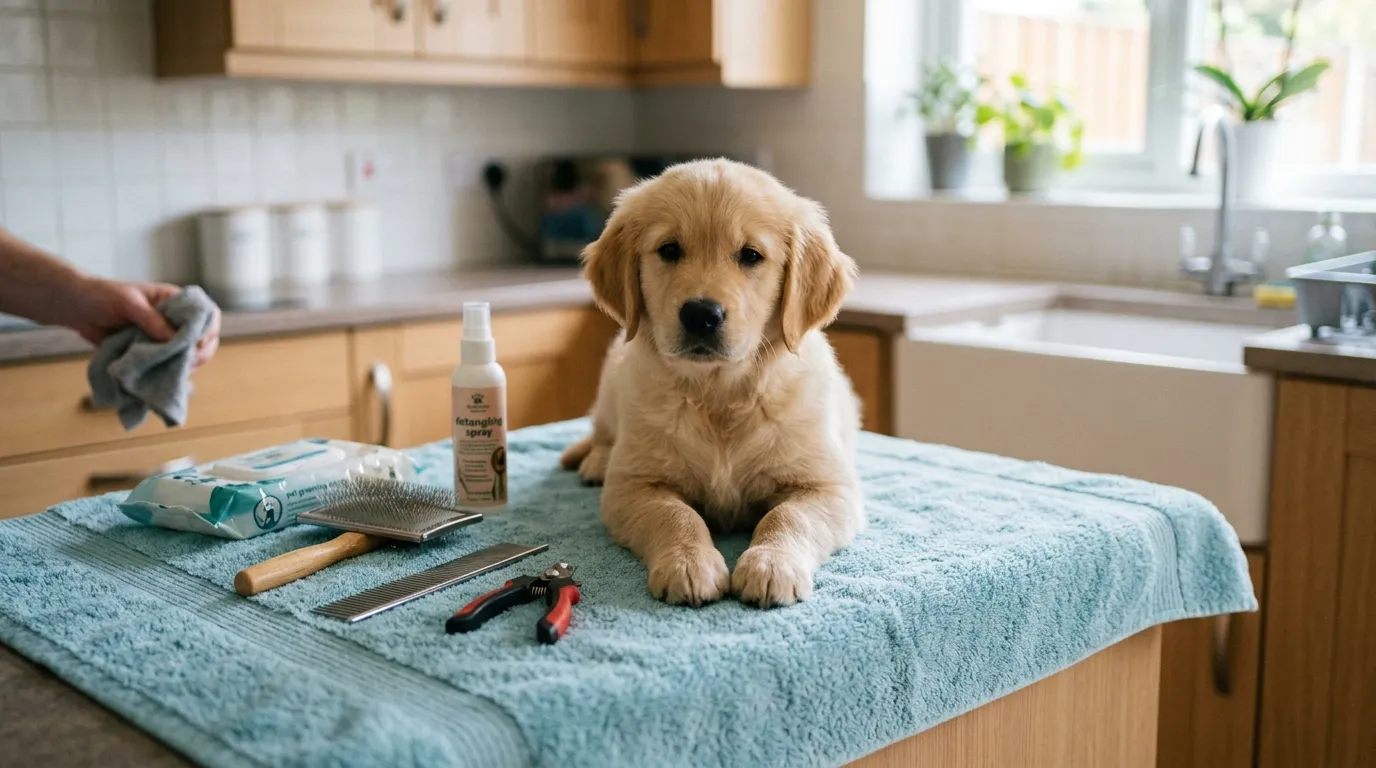
Grooming isn’t just about keeping your puppy looking cute – it’s one of the best ways to build trust early on, while catching potential health issues before they become bigger problems. If the thought of nail trims or bath time makes your puppy (or you) nervous, don’t worry. With the right approach, grooming can become a calm, even enjoyable routine for both of you.
Here’s exactly how to start grooming your puppy at home, step by step.
Why Early Grooming Habits Matter So Much
Getting your puppy comfortable with grooming now pays off for years to come.
- Builds tolerance for handling, which makes vet visits easier too
- Helps you spot skin issues, parasites, or injuries early
- Prevents matting, overgrown nails, and dental problems
- Creates a bonding routine built on trust, not stress
The goal isn’t a perfect groom right away – it’s a puppy who feels safe being handled.
Step 1: Start Slow with Simple Touch Exercises
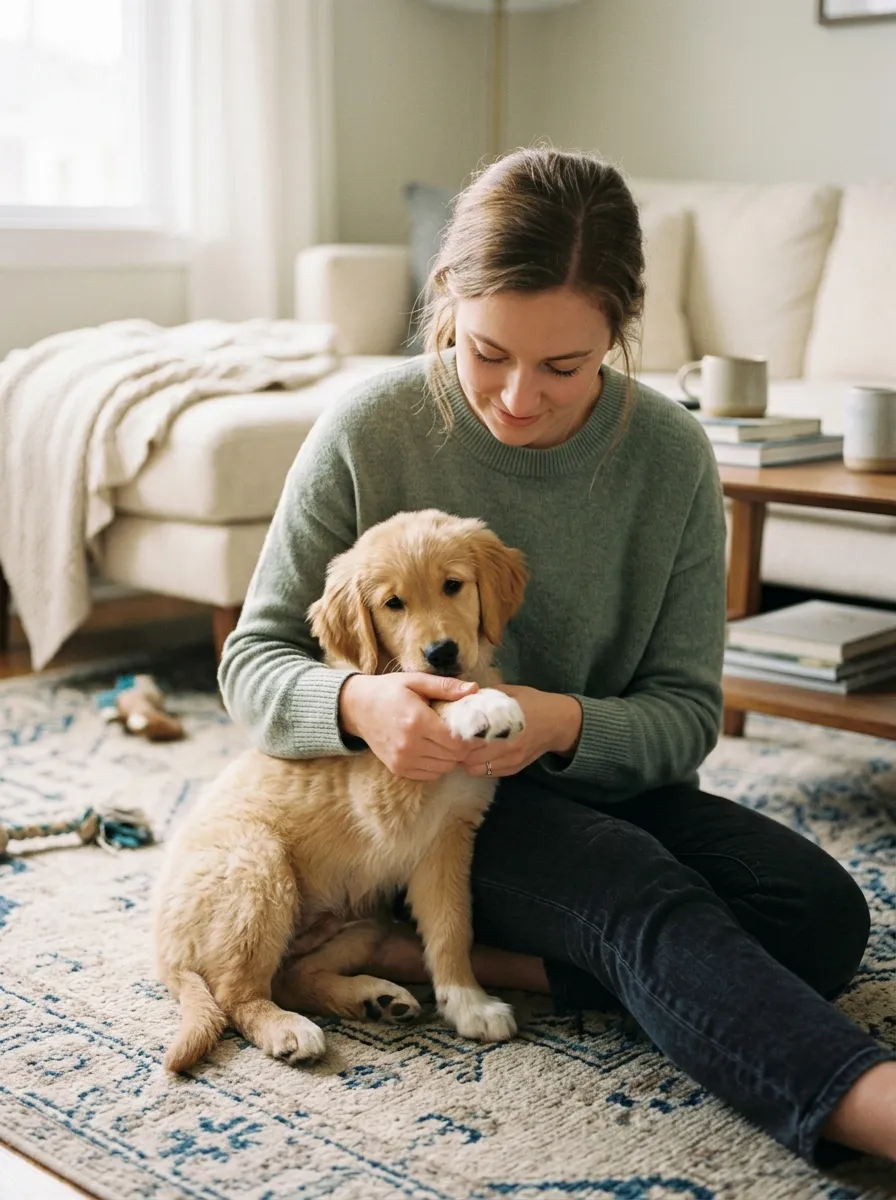
Before brushes or nail clippers even come out, your puppy needs to get comfortable being touched all over.
- Gently handle paws, ears, tail, and belly daily
- Keep sessions short – just a minute or two at first
- Pair touch with treats and calm praise
- Stop before your puppy gets overwhelmed, not after
Tip: This step alone makes every future grooming task dramatically easier.
Step 2: Introduce Brushing Early
Even short-haired puppies benefit from getting used to a brush early on.
- Choose a soft-bristle brush suited for puppies
- Start with short, gentle strokes in one direction
- Keep first sessions to just a couple of minutes
- Reward calm behavior throughout
Brushing regularly (2–3 times weekly, more for longer coats) helps prevent matting and reduces shedding around the house.
Step 3: Get Comfortable with Nail Trims
Nail trims tend to cause the most anxiety – but slow introduction makes a big difference.
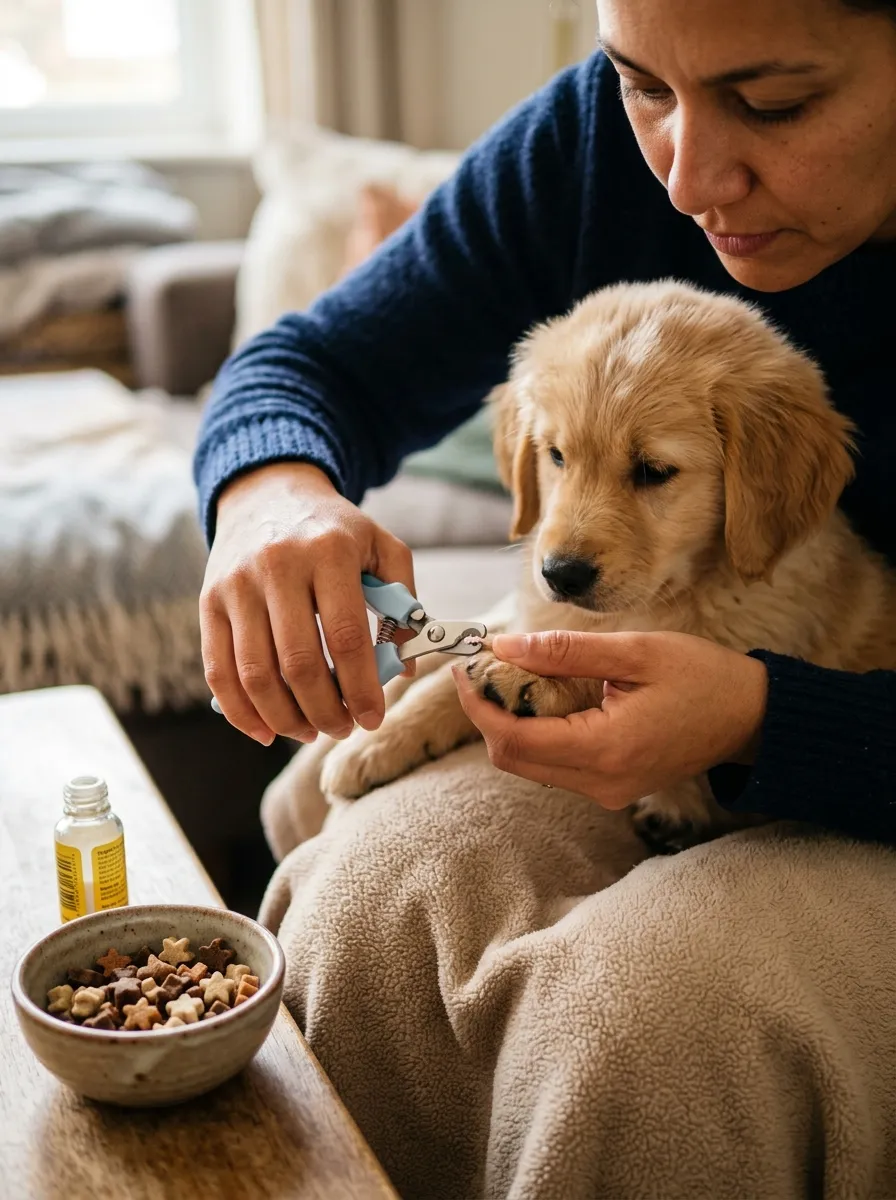
- Let your puppy sniff and inspect the clippers first
- Touch the clippers to their paw without cutting
- Trim just the very tip of one nail
- Reward immediately, even after just one nail
- Gradually work up to a full trim over several sessions
Tip: If your puppy has dark nails, trim in small increments to avoid cutting the quick – when in doubt, ask your vet or groomer to demonstrate.
Step 4: Introduce Bath Time Gradually
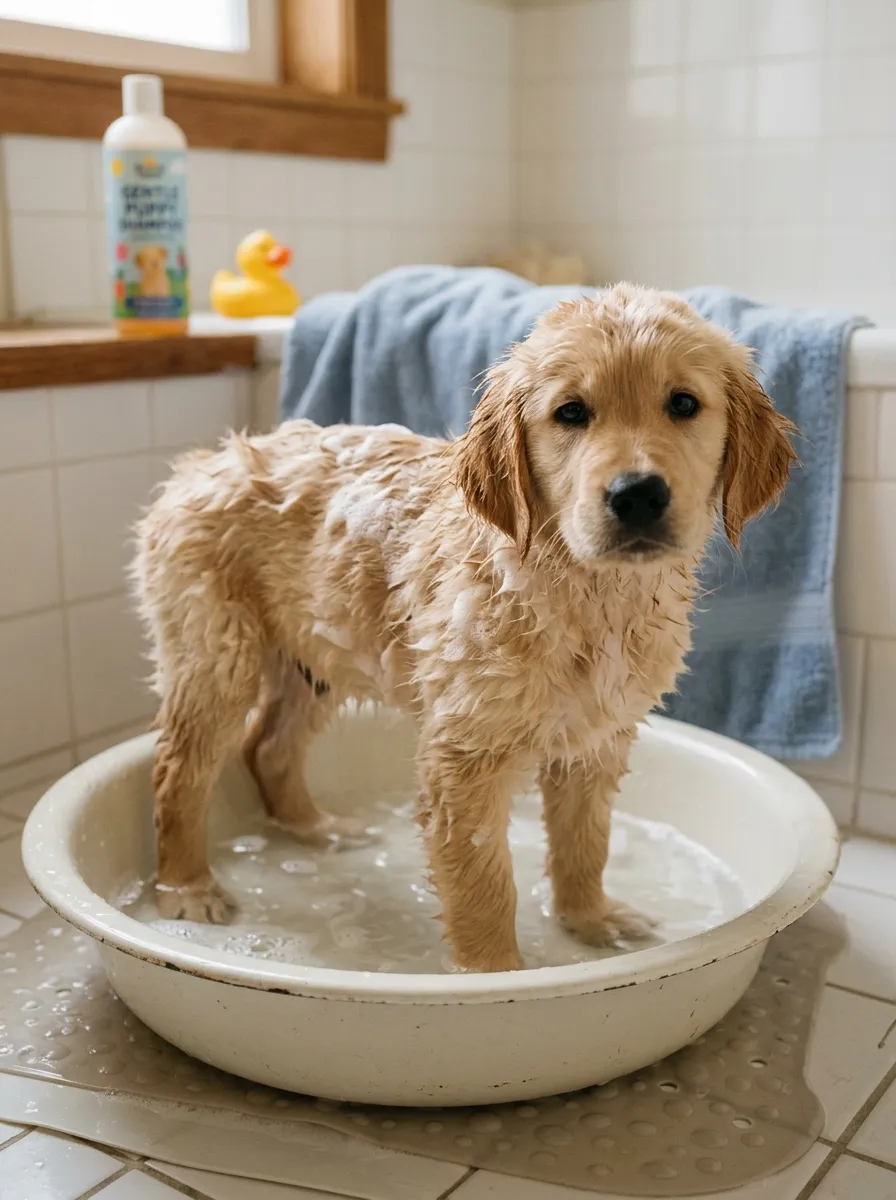
Bath time doesn’t need to be a splashy battle if you build up to it slowly.
- Start with a damp cloth wipe-down before a full bath
- Use lukewarm water and puppy-safe shampoo only
- Keep water away from ears, eyes, and nose
- Reward calm behavior throughout, not just at the end
Most puppies only need a bath every 3–4 weeks unless they get into something messy – over-bathing can dry out their skin.
Step 5: Clean Ears and Brush Teeth Early
These two areas are often skipped early on, but starting young makes a huge difference later.
Ears:
- Check weekly for redness, odor, or excess wax
- Knowing how to clean your puppy’s ears safely can help keep your puppy’s ears healthy and reduce the risk of infections.
- Use a vet-approved ear cleaner and cotton ball (never cotton swabs deep in the ear)
Teeth:
- Introduce a puppy-safe toothbrush and toothpaste
- Start with just touching the brush to their teeth briefly
- Build up to short daily brushing sessions
Avoid: Human toothpaste – it often contains ingredients unsafe for dogs.
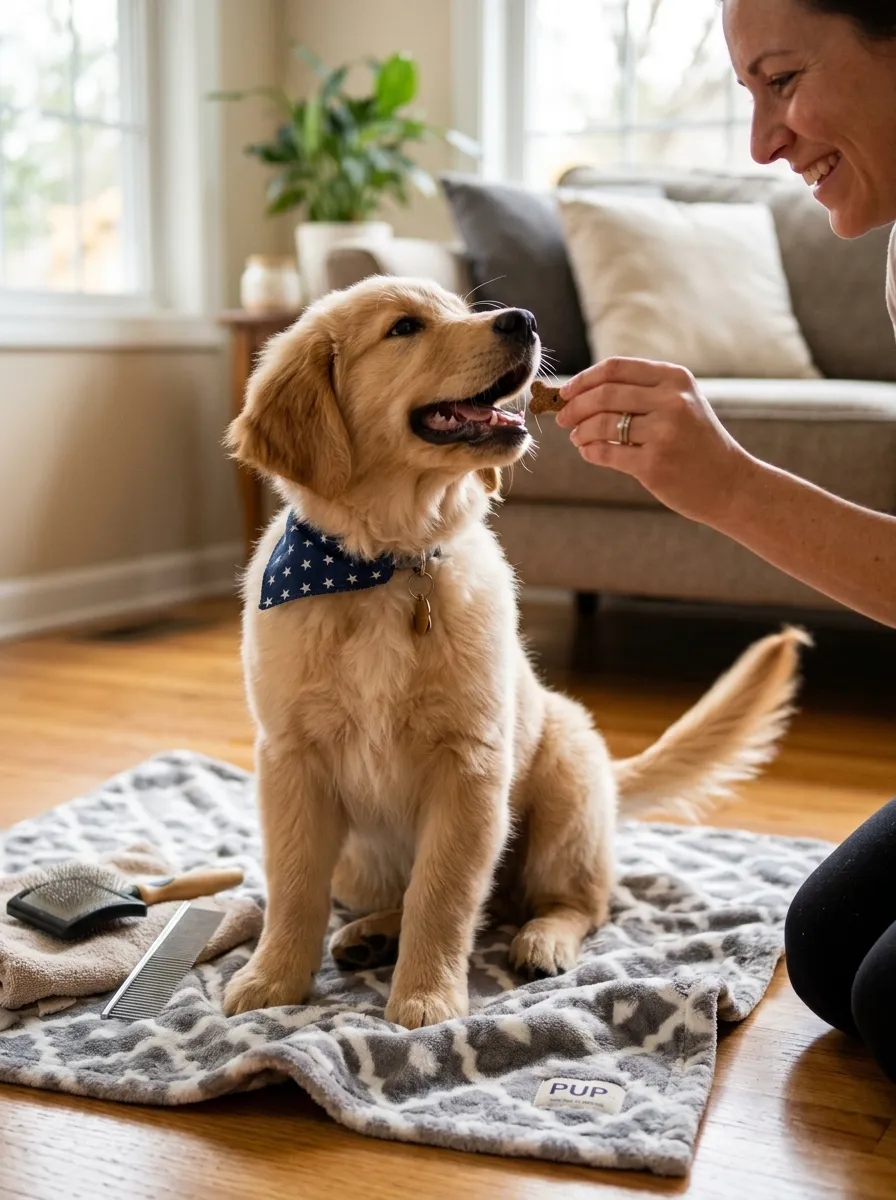
Step 6: Keep Every Session Short and Positive
The biggest mistake in home grooming is trying to do too much, too soon.
- End sessions on a positive note, even if brief
- Never force a squirming, stressed puppy through a full groom
- Use high-value treats specifically reserved for grooming time
- Build duration gradually as tolerance improves
Common Mistakes to Avoid
- Rushing through nail trims or baths too quickly
- Using human grooming products not made for dogs
- Skipping regular ear checks
- Forcing a stressed puppy to continue a session
- Waiting too long to introduce brushing or handling
A Simple At-Home Grooming Checklist
| Task | Frequency |
|---|---|
| Touch/handling practice | Daily |
| Brushing | 2–3 times weekly |
| Nail trims | Every 2–4 weeks |
| Bath time | Every 3–4 weeks |
| Ear checks | Weekly |
| Teeth brushing | Daily, if possible |
Keep this checklist handy as a simple routine builder while your puppy gets used to grooming.
Final Thoughts
Starting grooming at home doesn’t need to be stressful for you or your puppy. With slow introductions, plenty of positive reinforcement, and short, consistent sessions, grooming becomes just another normal (even enjoyable) part of your routine together.