
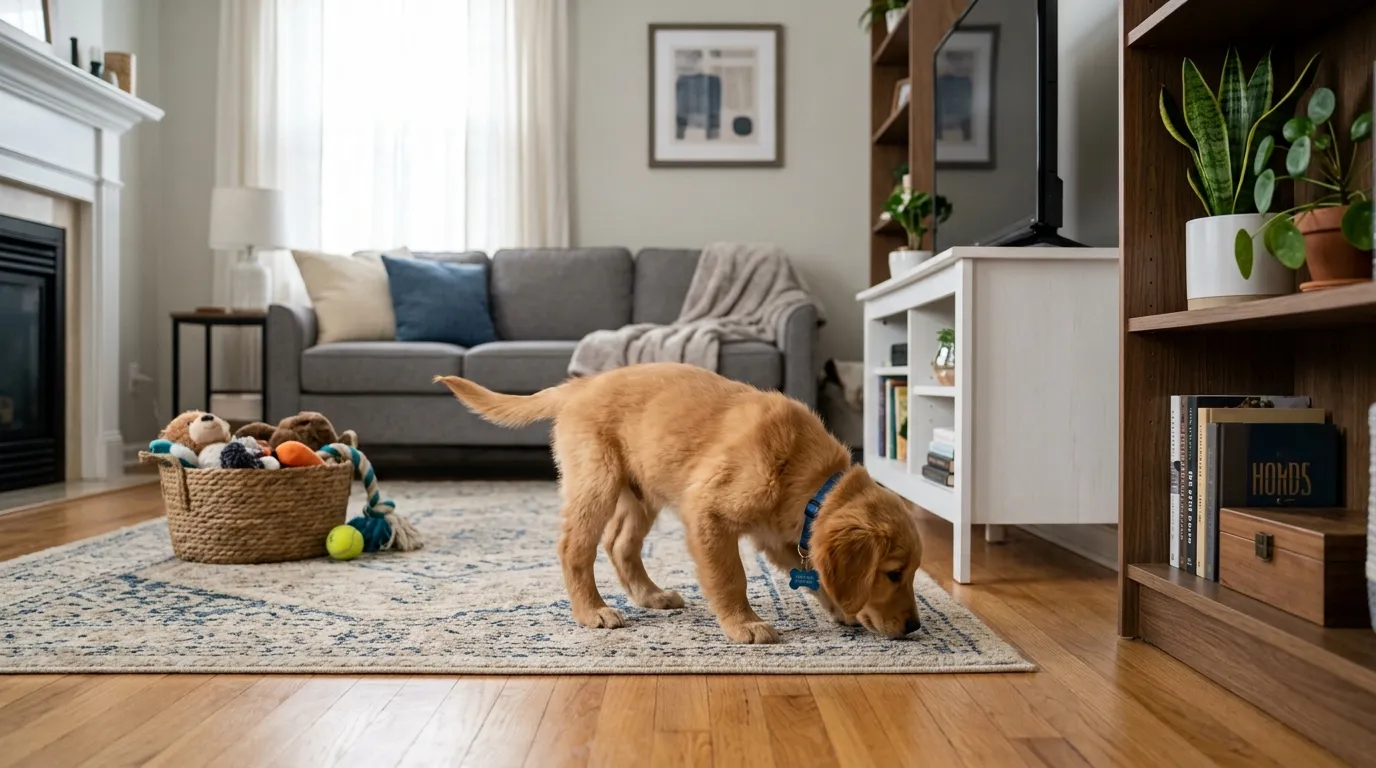
Bringing a puppy home is a lot like childproofing for a toddler who can jump, chew through cords, and fit into impossibly small spaces. Before those adorable paws start exploring, a little prep work can save you from vet emergencies, chewed-up furniture, and constant “no!” moments. Here’s exactly how to puppy-proof your home, room by room.
Let’s walk through it step by step so your home feels safe before your puppy even walks through the door.
Why Puppy-Proofing Matters So Much
Puppies explore the world with their mouths – which makes curiosity one of the biggest safety risks in a new home.
- Prevents choking hazards and accidental poisoning
- Reduces the risk of injury from electrical cords or sharp objects
- Protects your belongings from chewing and destruction
- Creates a calmer environment for both you and your puppy
A little prevention now saves a lot of stress (and vet bills) later.
Step 1: Get Down to Puppy Level
Before anything else, literally get on the floor and look around from your puppy’s perspective.
- Spot dangling cords, small objects, or loose items
- Check under furniture for forgotten hazards
- Notice gaps or spaces a curious puppy could squeeze into
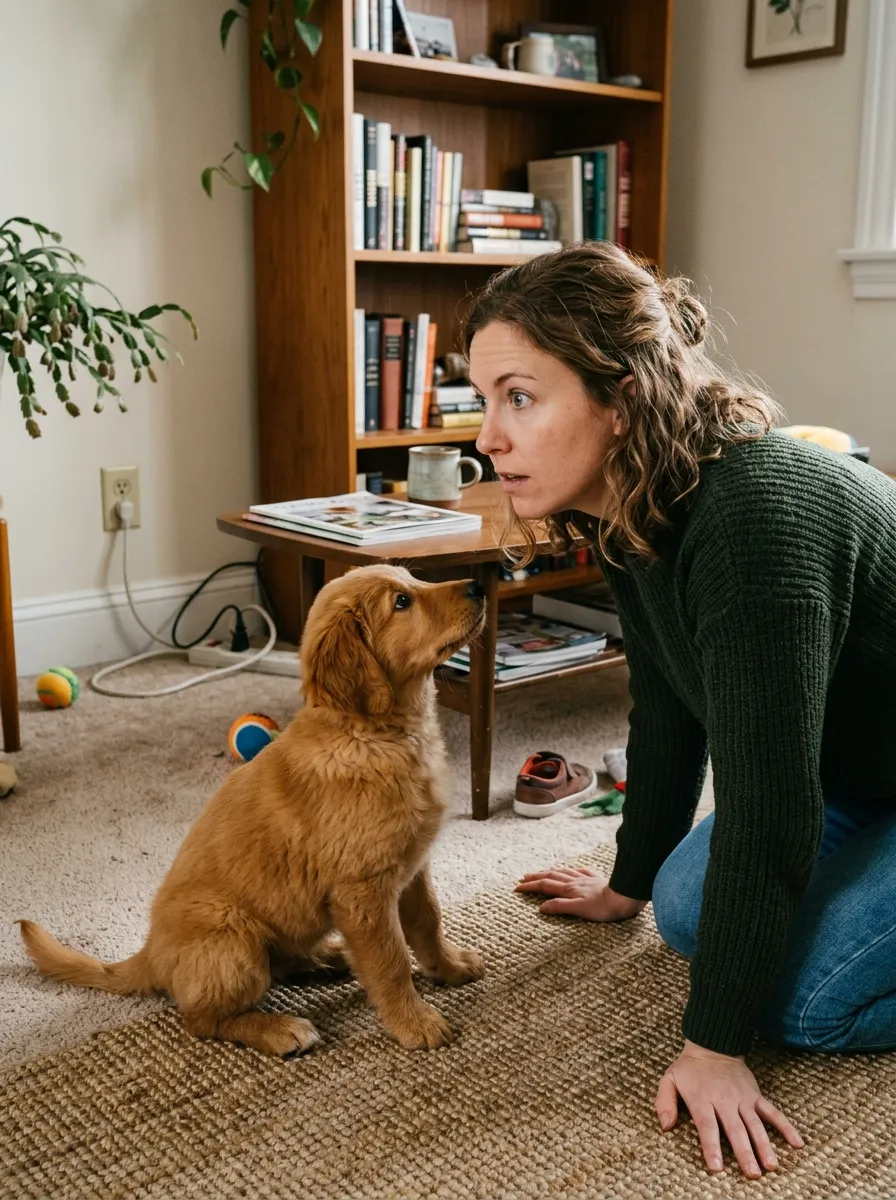
This simple exercise reveals risks you’d likely miss standing up.
Step 2: Secure Cords and Cables
Chewed cords are one of the most common (and dangerous) puppy hazards.
- Use cord protectors or cable sleeves
- Tuck loose cords behind furniture or along baseboards
- Unplug and store unused chargers and cables
- Consider bitter-tasting spray on cords within reach
Avoid: Leaving phone chargers or lamp cords dangling within easy chewing range.
Step 3: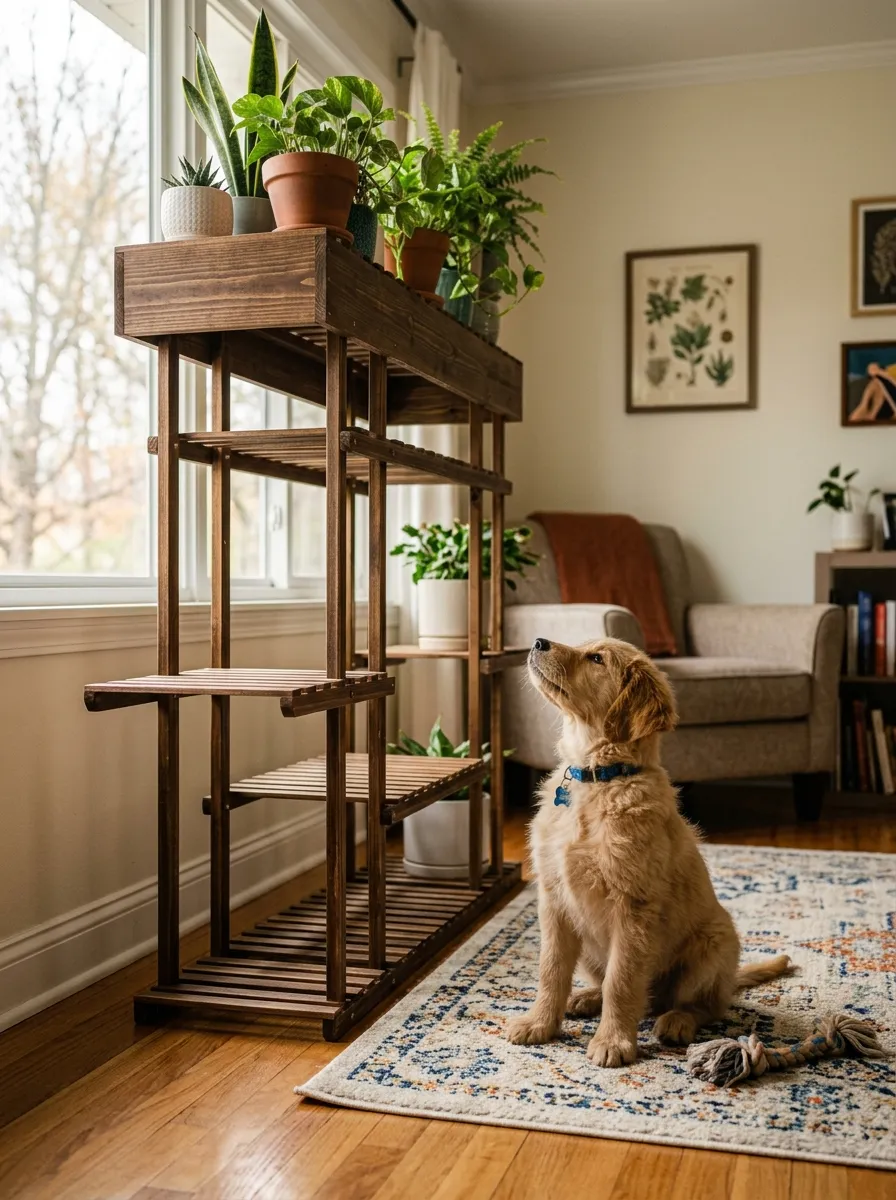
Many common houseplants are surprisingly toxic to dogs.
- Research your current plants against a pet-safe plant list
- Move toxic plants to high shelves or entirely different rooms
- Consider swapping risky plants for pet-safe alternatives
- Watch for fallen leaves or petals on the floor too
Tip: Common toxic plants include lilies, aloe vera and pothos – always double-check before decorating.
Step 4: Lock Away Household Chemicals
Cleaning supplies and chemicals are often stored at floor level – exactly where curious puppies roam.
- Move cleaning products to high cabinets or add child-proof locks
- Store laundry pods and detergents completely out of reach
- Keep trash cans covered or behind closed doors
- Be mindful of garage items like antifreeze, which is highly toxic
Even small amounts of certain chemicals can be extremely dangerous for a small puppy.
Step 5: Manage Small Objects and Choking Hazards
Puppies investigate everything with their mouths, making small items a real risk.
- Pick up coins, buttons, and small toys from the floor
- Store children’s toys out of reach when unsupervised
- Keep shoes, socks, and small household items put away
- Be extra mindful of items like hair ties, which are easy to swallow
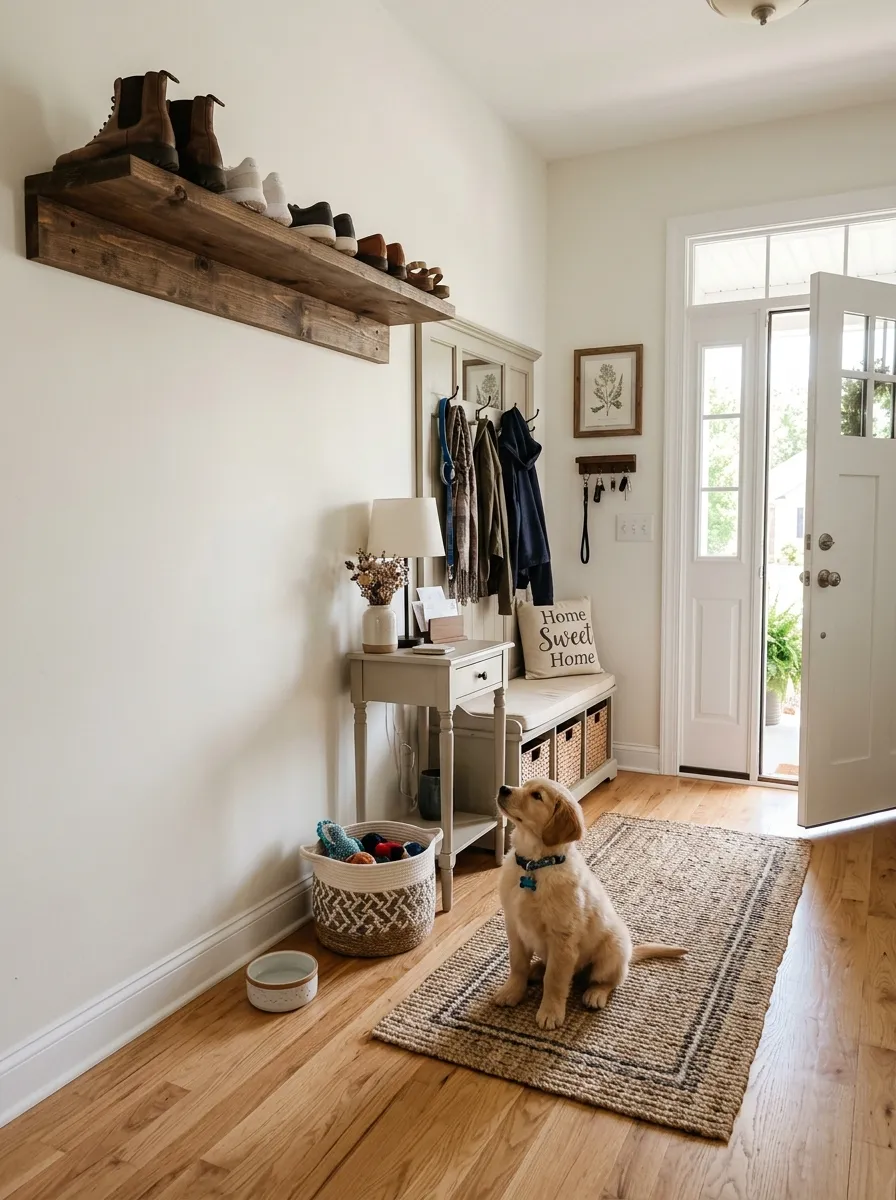
Tip: A quick daily floor sweep becomes second nature fast once you’re in puppy-parent mode.
Step 6: Block Off Risky Areas
Not every room needs to be fully puppy-accessible right away.
- Use baby gates to block stairs or off-limit rooms
- Close doors to areas with higher risk (garages, home offices)
- Consider a playpen for supervised independent time
- Block access to balconies or unsecured outdoor spaces
This gives your puppy freedom to explore safely while limiting access to riskier zones.
Step 7: Secure Trash and Food Areas
Kitchens are a hotspot for curious noses and potential hazards.
- Use trash cans with secure, weighted lids
- Keep counters clear of food within jumping or reaching range
- Store human food, especially toxic items like chocolate, grapes, and onions, out of reach
- Be mindful of pantry doors that puppies can learn to nudge open
[Image Prompt] A kitchen with a secured trash can lid and counters clear of food, puppy-safe and tidy.
Tip: Puppies grow fast – what’s “out of reach” today may not be in a few weeks.
Step 8: Create a Designated Safe Space
Every puppy benefits from one dedicated, fully safe area to retreat to.
- Set up a crate or playpen with soft bedding
- Keep only safe toys and chews within this space
- Use this area during unsupervised moments
- Make it a calm, positive retreat – not a punishment zone
A designated safe space reduces anxiety and gives you peace of mind when you can’t supervise directly. Keeping your puppy properly hydrated is also an important part of creating a safe and healthy routine at home.
Common Mistakes to Avoid
- Forgetting to check low cabinets and floor-level storage
- Assuming a plant is safe without checking
- Leaving trash cans easily accessible
- Underestimating how high or far a growing puppy can reach
- Skipping regular re-checks as your puppy grows and gets bolder
A Simple Room-by-Room Puppy-Proofing Checklist
| Room | Key Checks |
|---|---|
| Living Room | Cords, small objects, low shelves |
| Kitchen | Trash, food storage, cabinets |
| Bathroom | Cleaning supplies, toilet lid, trash |
| Bedroom | Shoes, laundry, small items |
| Outdoors | Toxic plants, fencing, chemicals |
Keep this checklist handy and revisit it every few weeks as your puppy grows and becomes more adventurous.
Final Thoughts
Puppy-proofing your home doesn’t have to be overwhelming – a little room-by-room effort upfront creates a much safer, calmer environment for everyone. As your puppy grows and explores more, just keep reassessing and adjusting along the way.