
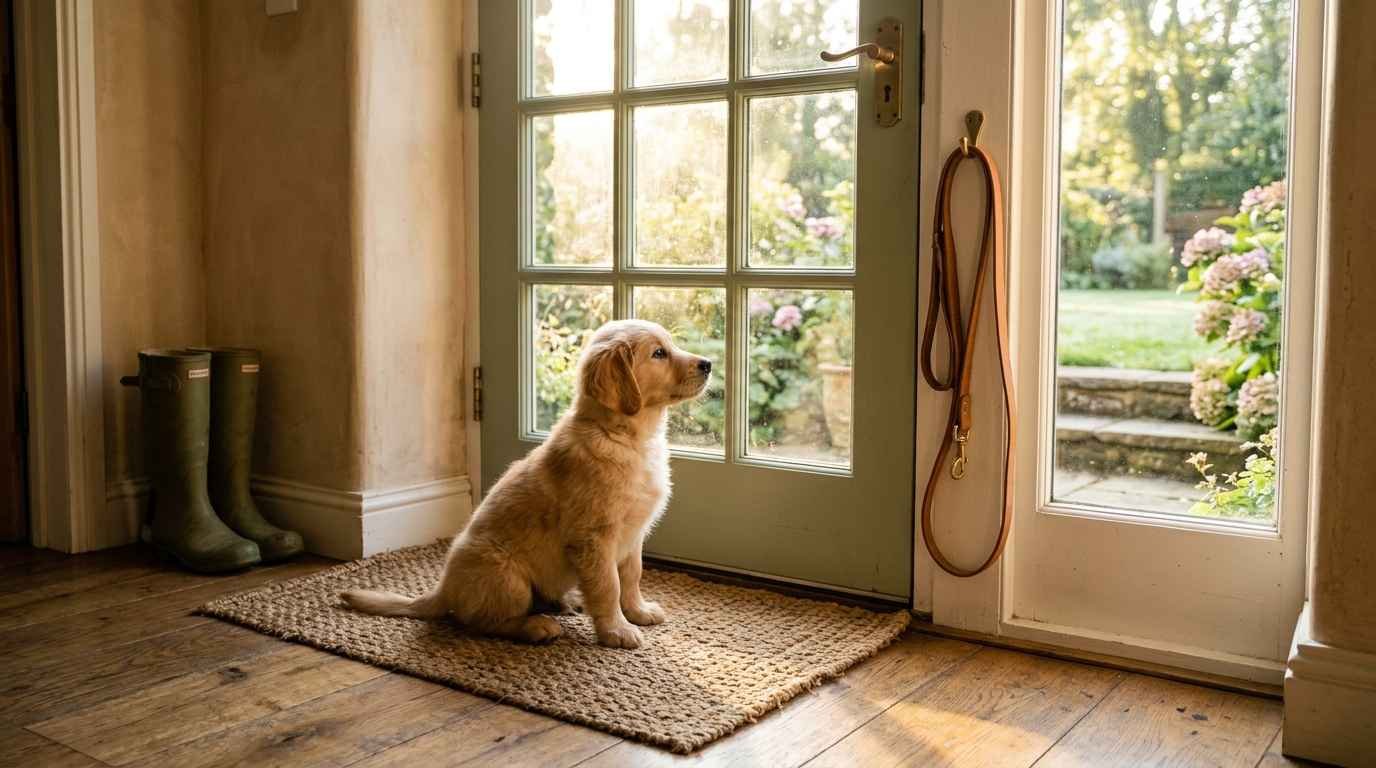
Puppy accidents happen – a lot of them, actually. But if you feel like you’re mopping up more than you’re playing fetch, there’s good news: potty training doesn’t have to drag on for months. With the right routine and a little consistency, most puppies can get the hang of it much faster than you’d expect.
Let’s walk through exactly how to speed up the process without losing your patience (or your carpet).
Why Potty Training Takes Time (and How to Shorten It)
Puppies don’t have full bladder control until around 4–6 months old. Before that, accidents aren’t about stubbornness – they’re biology.
The fastest results come from:
- Preventing accidents before they happen
- Rewarding success immediately and consistently
- Sticking to a predictable schedule
- Managing your puppy’s environment closely
Think of it less as “training” and more as “setting them up to succeed.”
Step 1: Establish a Strict Potty Schedule
A predictable schedule is the single biggest factor in faster potty training.
Take your puppy out:
- First thing in the morning
- After every meal (within 15–20 minutes)
- A consistent feeding routine makes potty training much easier. If you’re not sure when to feed your puppy at each stage, read our guide on How to Create a Puppy Feeding Schedule by Age for an age-based meal plan.
- After naps
- After play sessions
- Right before bedtime
- Every 1–2 hours in between for young puppies
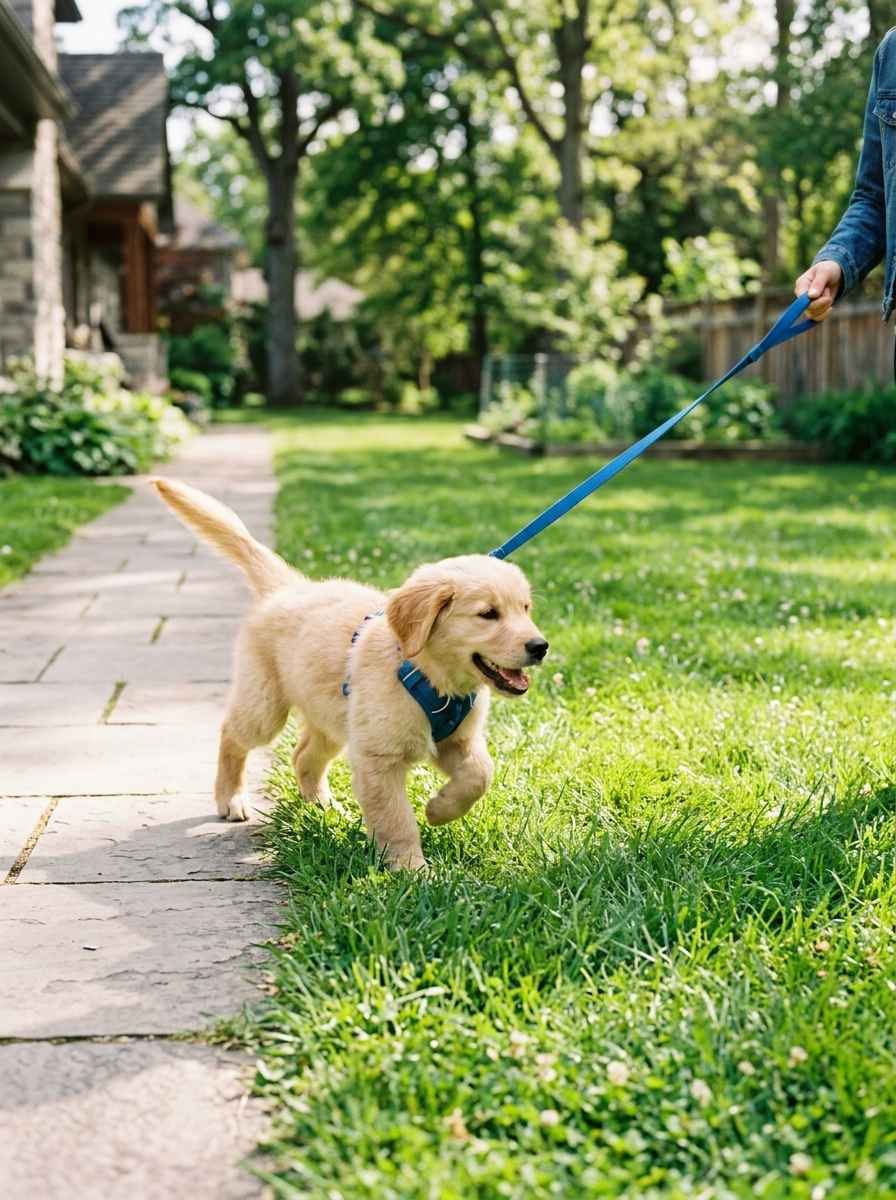
Tip: Take them to the same spot outside each time. The familiar scent helps trigger the behavior faster.
Step 2: Watch for the Warning Signs
Puppies usually signal before they go – you just have to catch it.
Look out for:
- Circling or sniffing the floor intensely
- Sudden stopping mid-play
- Whining or heading toward the door
- Squatting (obviously!)
The moment you notice any of these, scoop them up and head outside immediately. Speed matters here.
Step 3: Reward Success Instantly
Timing is everything with positive reinforcement.
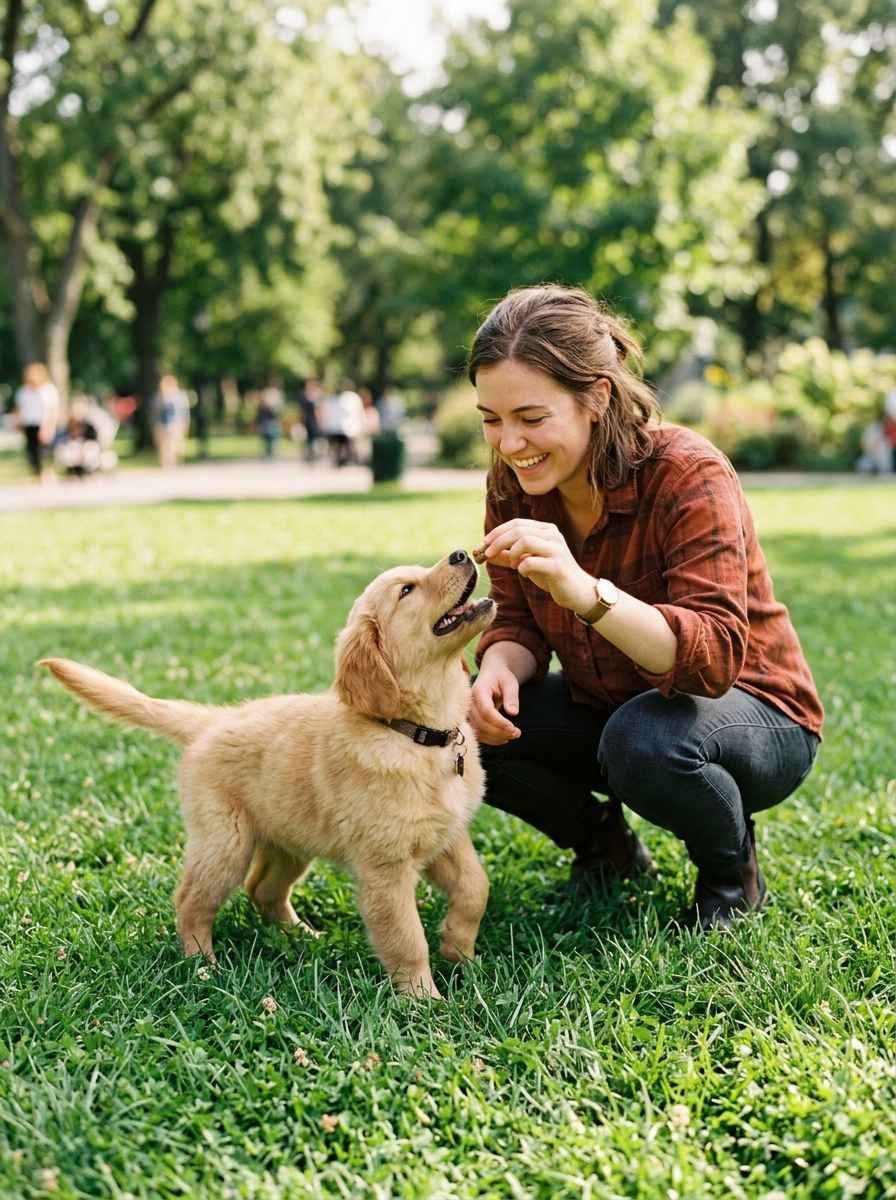
- Praise or treat within 3–5 seconds of them finishing outside
- Use a happy, upbeat voice (“Good potty!”)
- Avoid waiting until you’re back inside – the moment has passed
Why it works: Puppies connect the reward to the action, not the location. Quick, enthusiastic reinforcement speeds up learning dramatically.
Step 4: Use Crate Training to Prevent Accidents
Crates aren’t just for sleep – they’re a powerful potty training tool.
- Dogs instinctively avoid soiling their sleeping space
- A properly sized crate (just big enough to stand, turn, and lie down) discourages accidents
- Always take your puppy out immediately after crate time
Avoid: A crate that’s too large – puppies may use one end as a bathroom if there’s extra space.
Step 5: Supervise or Confine — No Exceptions
Free-roaming puppies without supervision are the #1 cause of slow potty training.
Try one of these strategies when you can’t watch closely:
- Tethering: Keep your puppy on a leash attached to you indoors
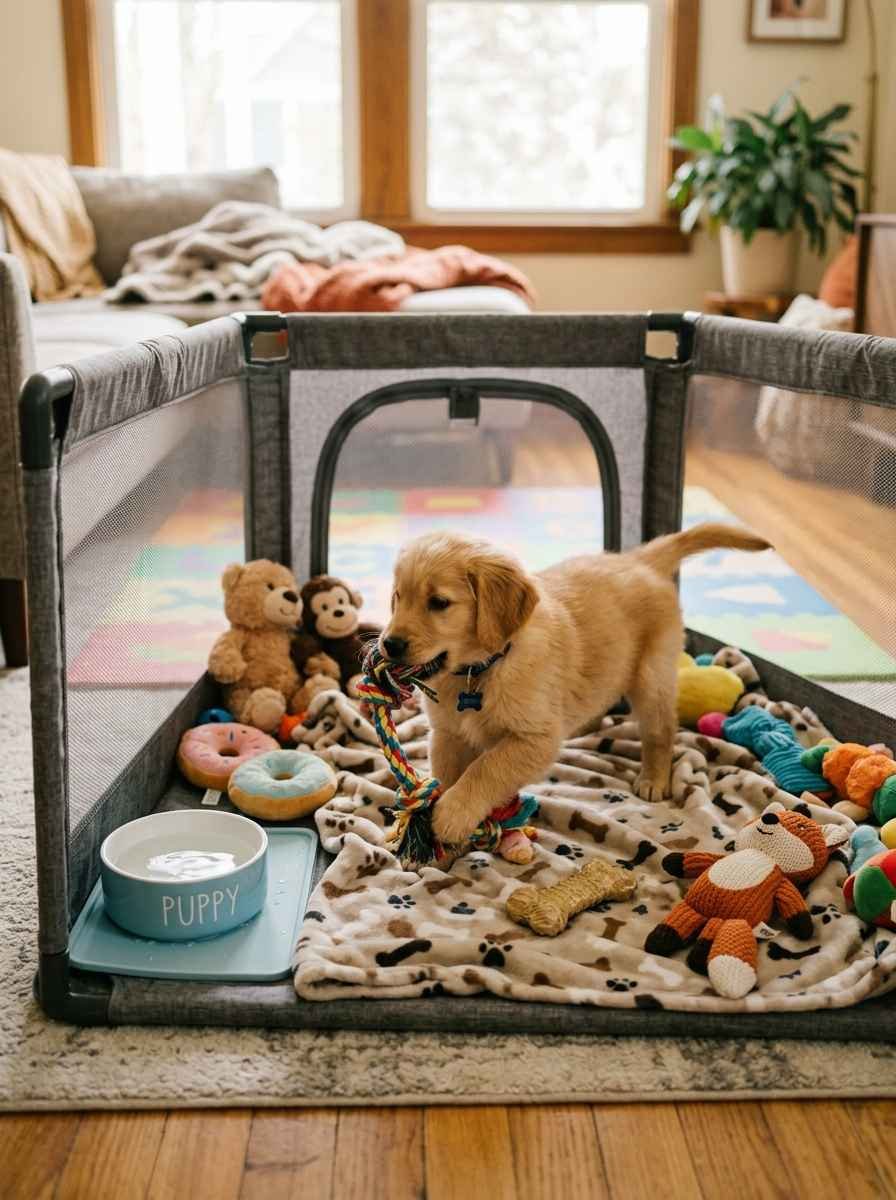
- Playpen or gated area: Confine them to a puppy-proofed space
- Crate rest: For short periods when you’re busy
The goal is simple: no accident should go unnoticed. If they mess up out of sight, you lose a training opportunity.
Step 6: Handle Accidents the Right Way
Mistakes will happen – how you respond matters more than the accident itself.
- Never punish after the fact; puppies don’t connect delayed discipline to the action
- Clean thoroughly with an enzymatic cleaner (regular cleaners don’t remove the scent fully)
- If you catch them mid-accident, calmly interrupt and rush them outside
Yelling or rubbing their nose in it doesn’t speed up training – it just creates fear and anxiety.
Common Mistakes That Slow Down Training
- Inconsistent potty schedule
- Giving too much freedom too soon
- Delayed rewards after successful potty breaks
- Punishing accidents instead of preventing them
- Skipping nighttime potty breaks for young puppies
A Sample Faster Potty Training Schedule
| Time | Action |
|---|---|
| Wake up | Straight outside |
| After breakfast | Potty break |
| Mid-morning | Potty break + play |
| After lunch | Potty break |
| Afternoon | Potty break + nap |
| After dinner | Potty break |
| Before bed | Final potty break |
Following this rhythm consistently for 2–3 weeks is often enough to see major progress.
Final Thoughts
Potty training faster isn’t about a magic trick – it’s about consistency, quick rewards, and close supervision. Every puppy learns at their own pace, but sticking to a solid routine dramatically shortens the timeline.