
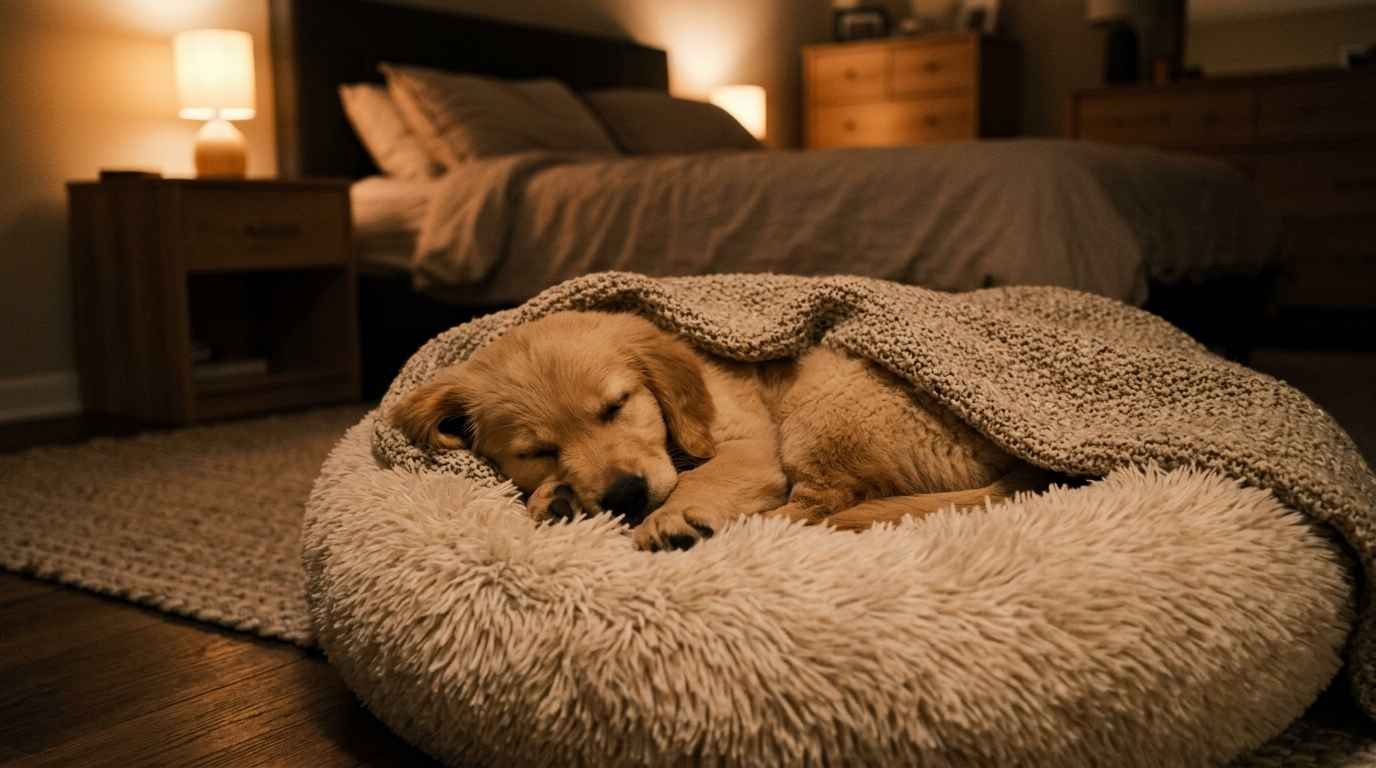
That sweet, sleepy puppy sigh as they finally drift off? Pure magic. But getting there – through the 2 a.m. whines, the zoomies at bedtime, and the naps that seem to strike at the worst possible moments – takes a little strategy. The good news is that puppies actually want to sleep a lot. You just need to help them do it on a schedule that works for everyone.
Here’s how to build a sleep routine your puppy – and your own sleep-deprived self – will genuinely benefit from.
Why Sleep Matters So Much for Puppies
Puppies aren’t just being lazy when they nap constantly. Sleep is when the real growing happens.
- Growth hormone is released during deep sleep
- The brain processes new experiences and training
- The immune system gets stronger
- Overtired puppies become cranky, bitey, and harder to train
In fact, most puppies need 18–20 hours of sleep a day in the first few months. That’s not a typo – it just comes in short bursts throughout the day rather than one long stretch.
Step 1: Set a Consistent Wake-Up Time
Just like humans, puppies thrive on routine. Pick a wake-up time and stick to it daily, even on weekends.
- Take them straight outside to potty
- Follow with a short play session or feeding
- Avoid letting them “sleep in” in their crate – it can throw off the whole day
Consistency here sets the tone for nap times and bedtime later.
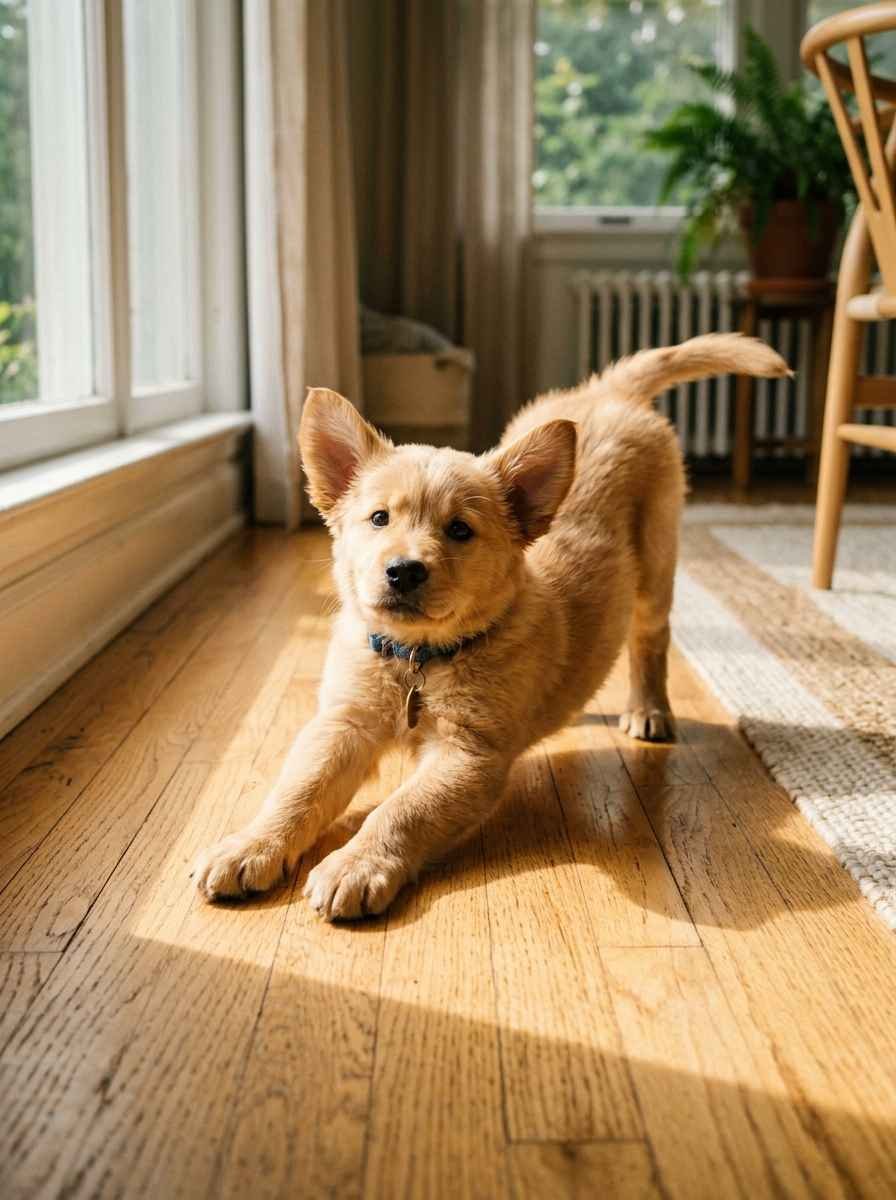
Step 2: Build in Scheduled Naps
Puppies can’t self-regulate their energy yet, so scheduled naps prevent over tiredness (which often looks like hyper, nippy behaviour not sleepiness).
A general nap guide by age:
- 8–12 weeks: Naps every 1–2 hours, several times a day
- 3–6 months: 3–4 naps daily, slightly longer stretches
- 6–12 months: 2–3 naps, gradually consolidating
- 12+ months: 1–2 naps, closer to adult patterns
Tip: After 20–30 minutes of active play, gently guide your puppy to a quiet space to wind down – don’t wait for a meltdown.
Step 3: Create a Wind-Down Routine Before Bed
Dogs, like kids, do best with a predictable “cue” that bedtime is coming.
Try this simple wind-down sequence:
- Final potty break outside
- Calm, quiet play (no wild zoomies right before bed)
- Dim the lights
- A consistent bedtime routine works even better when combined with proper crate training. Learn more in our How to Crate Train a Puppy Without Crying guide.
- Settle into the crate or bed with a familiar blanket or toy
- A soft verbal cue like “bedtime” said consistently
Over time, your puppy will start recognising this pattern and self-soothing into sleep mode.
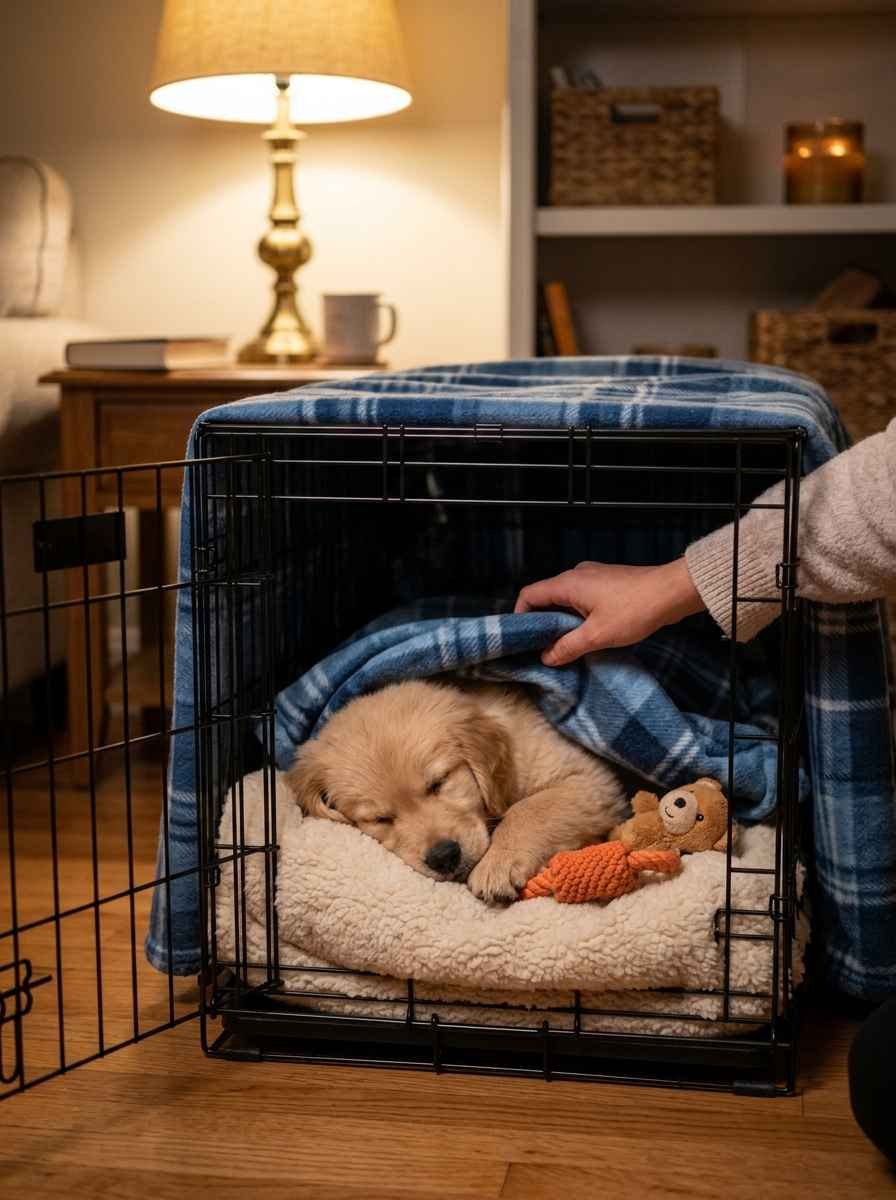
Step 4: Choose the Right Sleep Space
Where your puppy sleeps matters just as much as when.
- Crate training is widely recommended – it mimics a den and provides security
- Keep the space quiet, dark, and temperature-controlled
- Avoid placing the crate in high-traffic or noisy areas
- Add a worn t-shirt with your scent for comfort during the first few nights
Avoid: Sleeping in your bed too early on – it can make later transitions (or house-training) trickier.
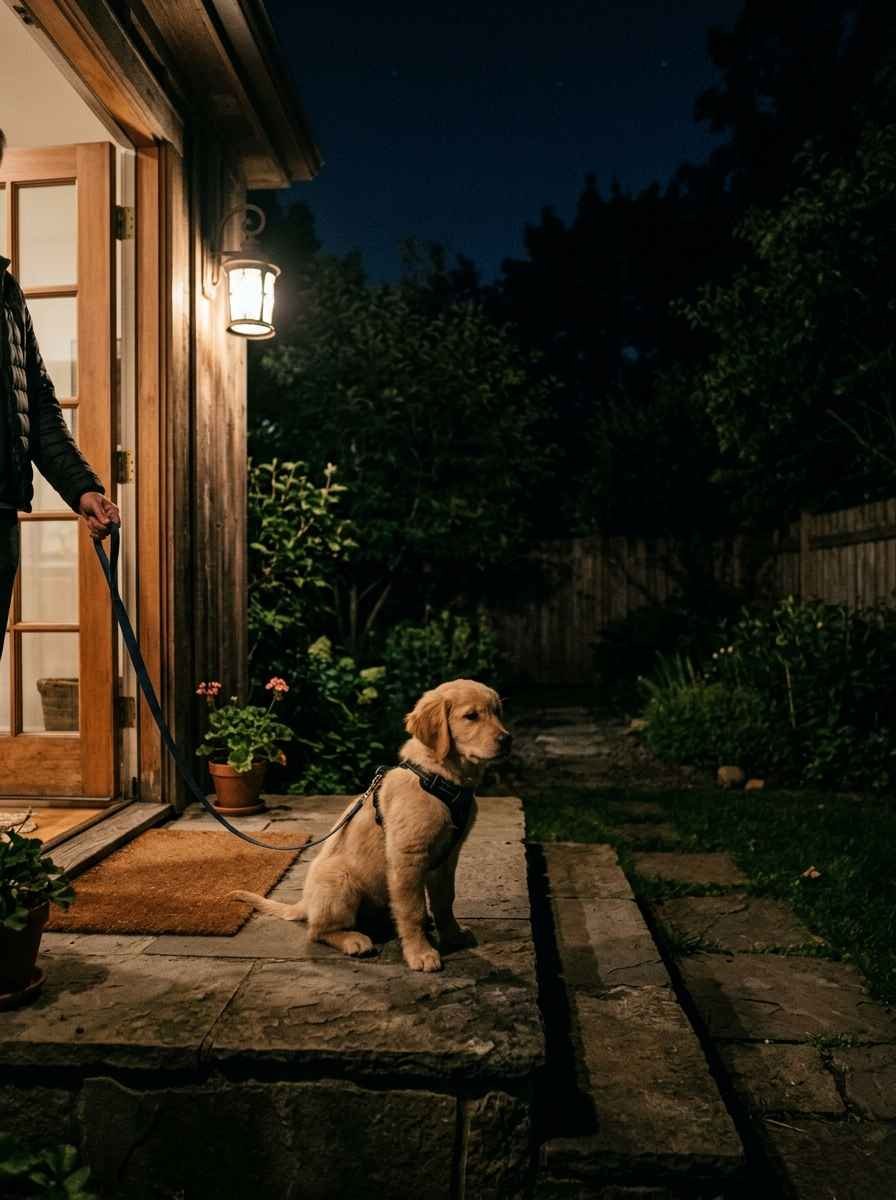
Step 5: Handle Nighttime Wake-Ups Calmly
Especially in the first few weeks, nighttime potty breaks are normal and necessary.
- Keep these outings boring: minimal talking, dim lights, no play
- Take them straight back to bed afterwards
- Avoid feeding during nighttime wake-ups (it can create a habit)
This teaches your puppy that nighttime = sleep time, not playtime.
Common Sleep Routine Mistakes to Avoid
- Letting naps happen randomly – leads to overtired, hyper behaviour later
- Inconsistent bedtime – confuses their internal clock
- Too much stimulation before bed – makes settling down harder
- Skipping the wind-down routine – puppies need the cue, not just the clock
A Simple Daily Sleep Rhythm to Follow
| Time of Day | Activity |
|---|---|
| Morning | Wake, potty, play/feed |
| Midday | Nap, potty, short play |
| Afternoon | Nap, feed, gentle activity |
| Evening | Wind-down routine begins |
| Night | Bedtime cue, crate, lights out |
Pin this rhythm somewhere handy – it’s a great baseline to adjust as your puppy grows.
Final Thoughts
A healthy sleep routine isn’t about rigid rules – it’s about rhythm and consistency. As your puppy grows, their sleep needs will naturally shift, and that’s totally normal. Stick with the routine, stay patient through the adjustment period, and soon you’ll both be sleeping soundly.