
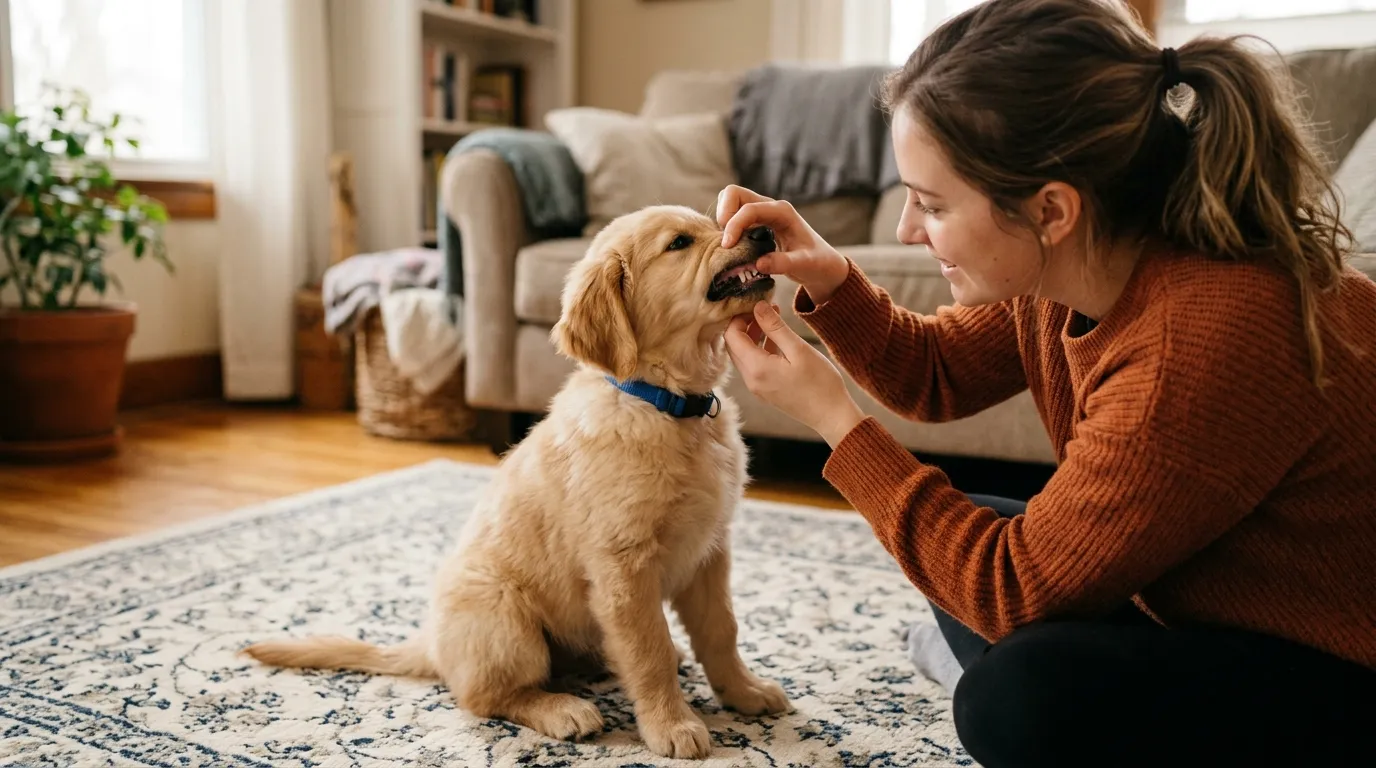
Dental care might be the most overlooked part of puppy grooming – but it’s one of the most important. Skipping it early on can lead to plaque buildup, bad breath, and dental issues down the road. The good news? Puppies are actually the easiest age to introduce tooth brushing, since they haven’t developed any fear or resistance yet.
Here’s exactly how to brush your puppy’s teeth the right way, from the very first session.
Why Early Dental Care Matters So Much
Starting dental habits young sets your puppy up for a lifetime of better oral health.
- Prevents plaque and tartar buildup before it starts
- Reduces the risk of gum disease later in life
- Helps avoid costly dental procedures down the road
- Builds comfort with mouth handling, which makes vet checkups easier too
Most dogs show signs of dental disease by age three without regular care – making early habits incredibly valuable.
Step 1: Choose the Right Tools
Using the correct supplies makes a big difference in both safety and effectiveness.
You’ll need:
- A puppy-specific toothbrush (or a finger brush for beginners)
- Dog-safe toothpaste (never human toothpaste)
- Optional: dental wipes as a gentler starting point
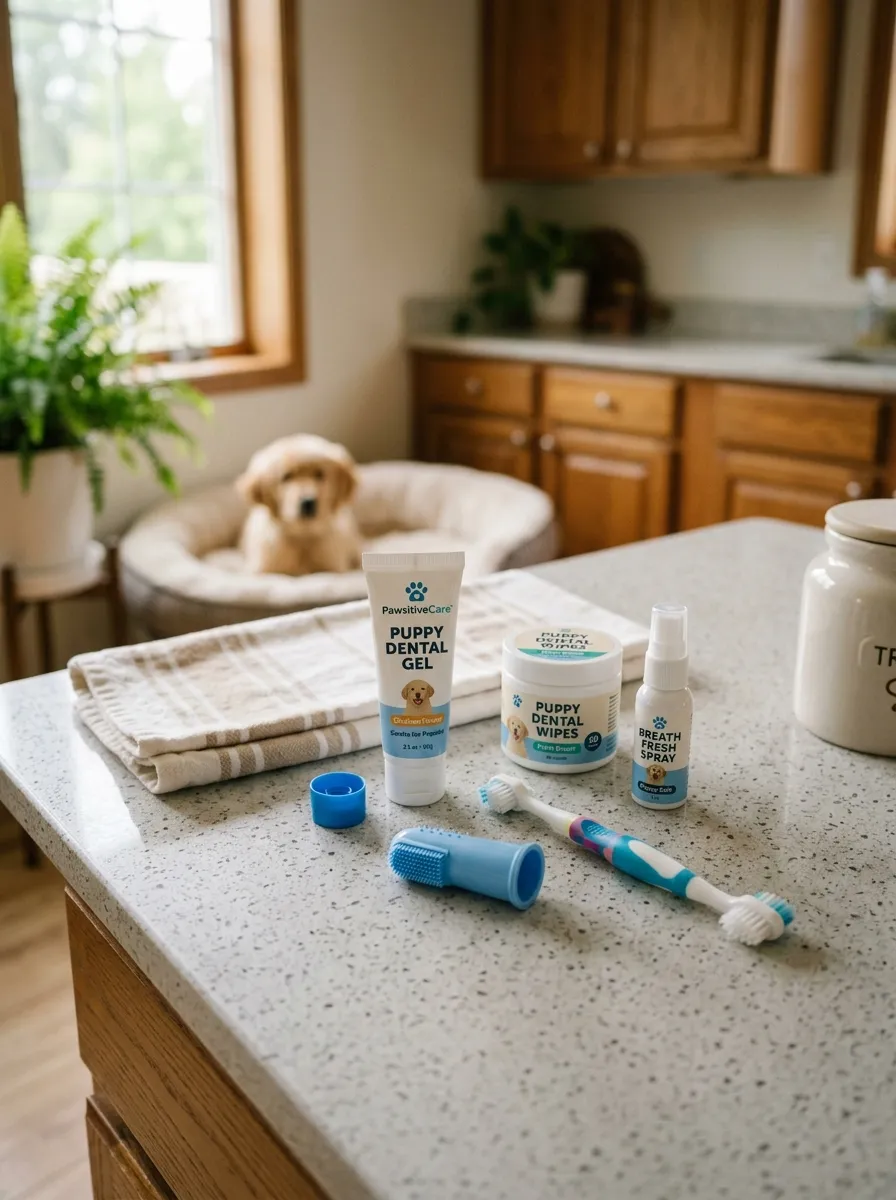
Avoid: Human toothpaste entirely – it often contains xylitol or fluoride, which can be toxic to dogs.
Step 2: Let Your Puppy Taste the Toothpaste First
Before any brushing happens, let your puppy get comfortable with the flavor and texture.
- Offer a small dab of dog-safe toothpaste on your finger
- Let them lick it off like a treat
- Repeat this for a few days before introducing a brush
- Choose a flavor your puppy responds well to (many love poultry or peanut butter flavors)
This step alone builds positive associations before any actual brushing begins.
Step 3: Get Them Comfortable with Mouth Handling
Puppies need to feel relaxed having their mouth touched before a toothbrush comes into play.
- Gently lift their lips for a few seconds at a time
- Softly touch their teeth and gums with a clean finger
- Pair each touch with praise or a small treat
- Keep sessions short – just a few seconds to start

Tip: This groundwork is often more important than the brushing technique itself.
Step 4: Introduce the Toothbrush Gradually
Once your puppy tolerates mouth handling well, it’s time to bring in the brush.
- Apply a small amount of dog toothpaste to the brush
- Gently lift the lip and touch the brush to just a few teeth
- Use small, gentle circular motions
- Start with just the outer surfaces (the easiest to reach)
- Keep the first sessions to just a few seconds
- As your puppy becomes more comfortable with tooth brushing, it’s a great time to build positive habits around stress-free nail trimming too.
How to Trim Puppy Nails Without Stress.
Reward calm behavior generously – puppies who feel successful early on adapt to brushing much faster.
Step 5: Build Up to Full Brushing Sessions
As your puppy becomes more comfortable, gradually extend the process.
- Slowly increase the number of teeth brushed per session
- Aim to eventually cover all outer tooth surfaces
- Inner surfaces are less critical, especially early on
- Keep total brushing time around 30–60 seconds once fully adjusted
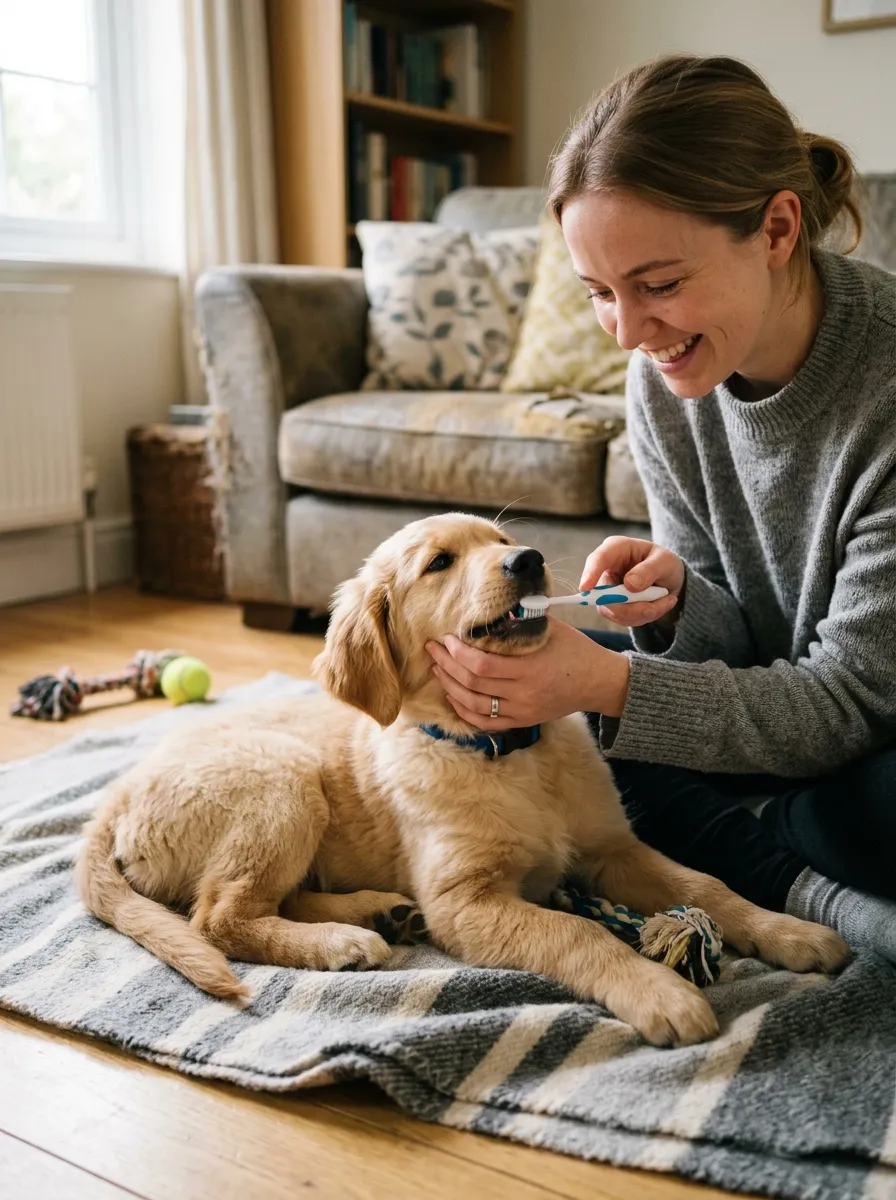
Tip: Consistency matters more than intensity – a short daily session beats a long, stressful one.
Step 6: Establish a Regular Brushing Routine
Like most habits, frequency is what makes dental care effective long-term.
- Ideal: Daily brushing
- Minimum recommended: 3–4 times per week
- Choose a consistent time, like after a walk or before bed
- Keep the routine calm and predictable
Even a few times a week is far better than skipping dental care altogether.
Supporting Dental Health Beyond Brushing
Brushing is the gold standard, but a few extras can help along the way.
- Dental chews designed for puppies
- Vet-approved water additives
- Appropriate chew toys that help reduce plaque
- Regular vet dental checks during routine visits

Note: These are supplements to brushing, not replacements for it.
Common Mistakes to Avoid
- Using human toothpaste
- Jumping straight to brushing without a handling introduction
- Brushing too roughly or for too long early on
- Skipping regular sessions until it becomes a rare event
- Ignoring bad breath or visible tartar as “normal”
A Simple Teeth Brushing Progression
| Stage | Focus |
|---|---|
| Days 1–3 | Toothpaste tasting, mouth handling |
| Days 4–5 | Introduce brush, a few teeth only |
| Week 2 | Build up to more teeth per session |
| Week 3+ | Full daily or near-daily brushing |
Every puppy adjusts at their own pace – patience here pays off for years to come.
Final Thoughts
Brushing your puppy’s teeth doesn’t have to be a fight. With gradual introduction, positive reinforcement, and consistency, dental care becomes just another simple part of your routine – one that protects their health for the long run.