
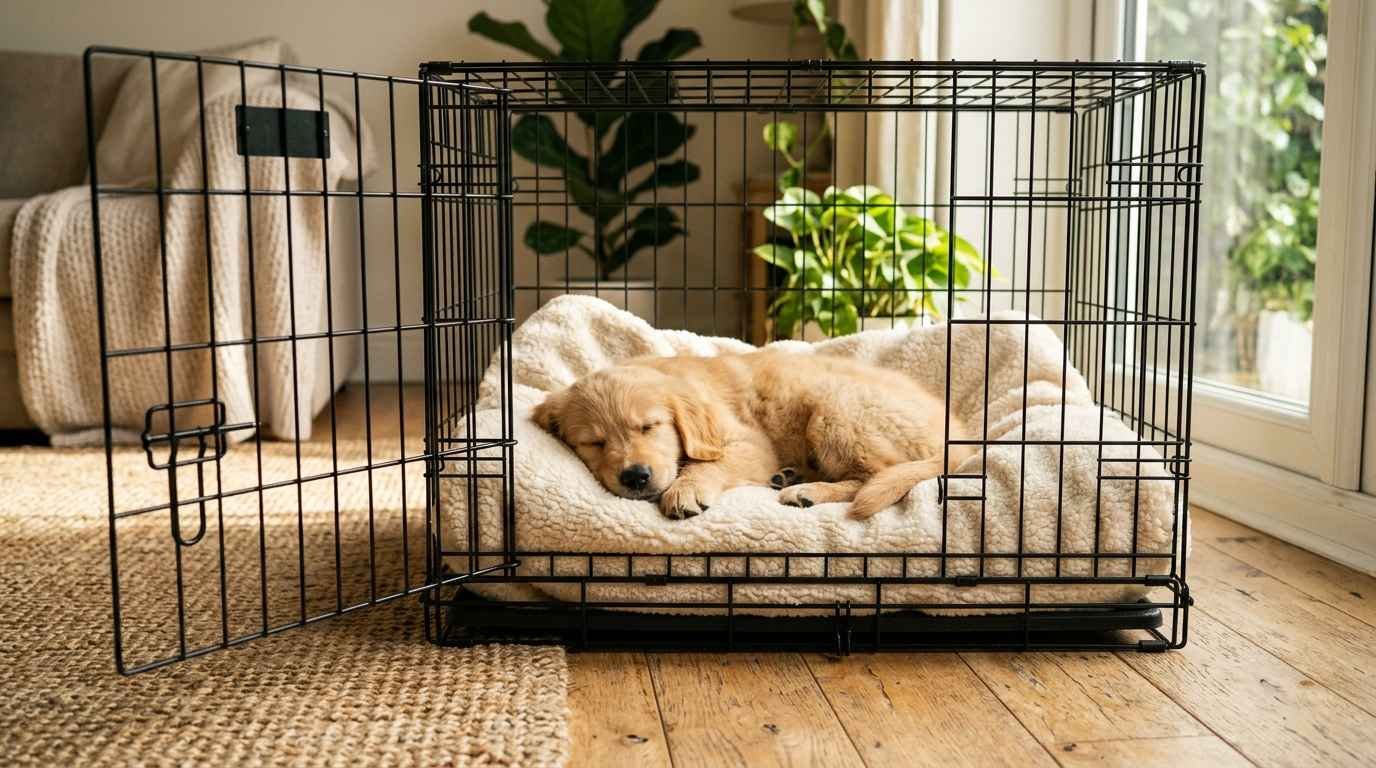
If the mere thought of crate training brings up images of a puppy wailing through the night, you’re not alone – it’s one of the biggest worries new puppy parents have. But here’s the truth: crying isn’t actually a required part of crate training. With the right approach, most puppies can learn to love their crate as a cozy safe space, not a scary box.
Let’s break down exactly how to make crate training smooth, stress-free, and (mostly) tear-free.
Why Puppies Cry During Crate Training
Before jumping into solutions, it helps to understand why crying happens in the first place:
- The crate feels unfamiliar and confining
- Separation anxiety from you or litter mates
- The crate was introduced too quickly
- Negative associations (used only for punishment or isolation)
The good news? Almost all of this comes down to pacing and positive association-both of which you can control.
Step 1: Make the Crate a Happy Place First
Never introduce the crate as a “bedtime-only” tool right away. Instead, turn it into your puppy’s favourite hangout spot before asking them to sleep there.
- Leave the crate door open during the day
- Toss treats or favourite toys inside for them to discover
- Feed meals near, then eventually inside, the crate
- Let them wander in and out freely – no pressure
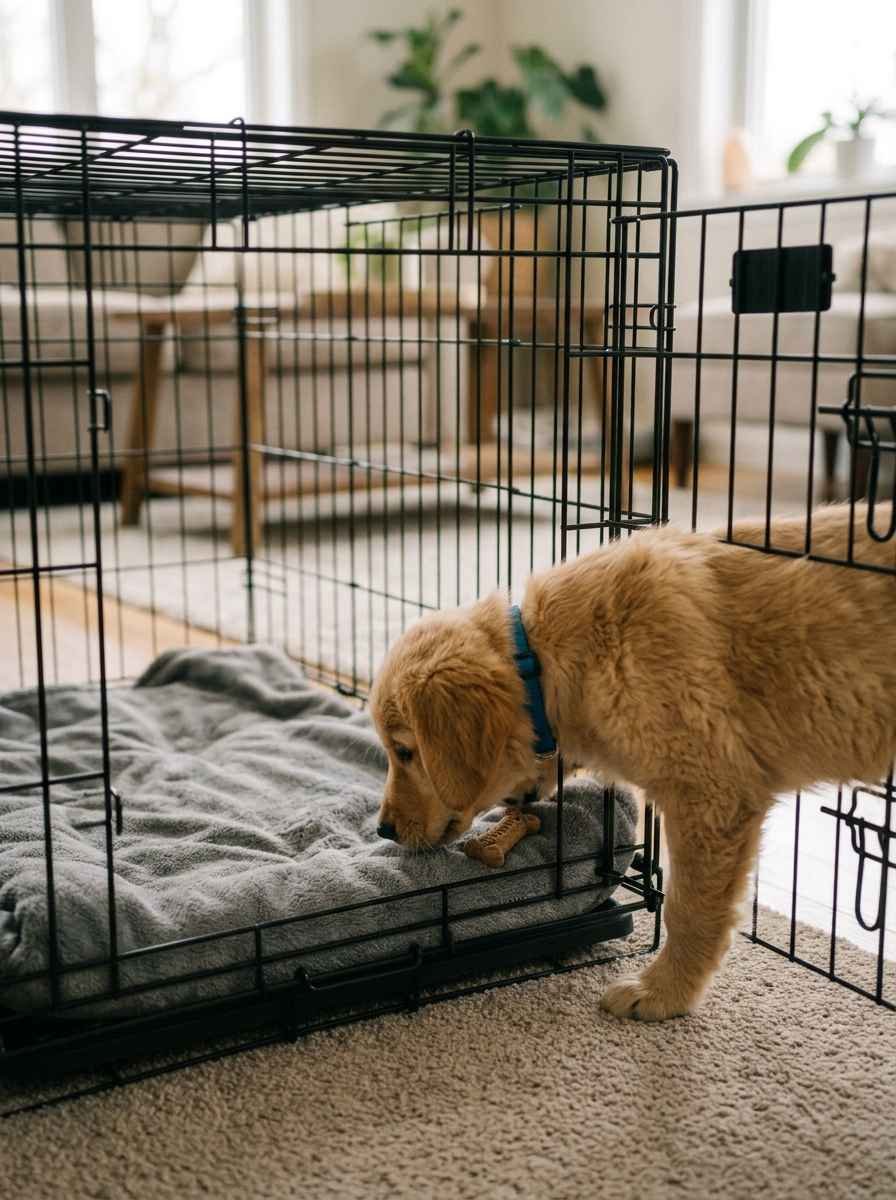
Tip: Never force or push your puppy into the crate. Let curiosity lead the way.
Step 2: Build Up Alone Time Gradually
Jumping straight to “closed door, all night” is the #1 reason puppies cry. Instead, build tolerance in small steps.
A gentle progression:
- Puppy eats/plays near open crate
- Puppy enters crate voluntarily for treats
- Close the door for 30 seconds while you stay nearby
- Gradually increase time to a few minutes
- Step out of the room briefly, then return
- Slowly extend both duration and distance
Each step should feel easy and low-stress before moving to the next one. If crying starts, you’ve likely moved too fast – dial it back a notch.
Step 3: Time Crate Sessions with Tiredness
A tired puppy is a calm puppy. Timing matters just as much as technique.
- Crate them after a play session or walk, not before
- Avoid crating a puppy who’s full of pent-up energy
- Pair crate time with naturally sleepy moments (after meals, after potty breaks)
- A consistent sleep schedule also makes crate training easier. If you’re not sure where to start, check out our guide on How to Build a Healthy Puppy Sleep Routine for practical daily sleep tips.
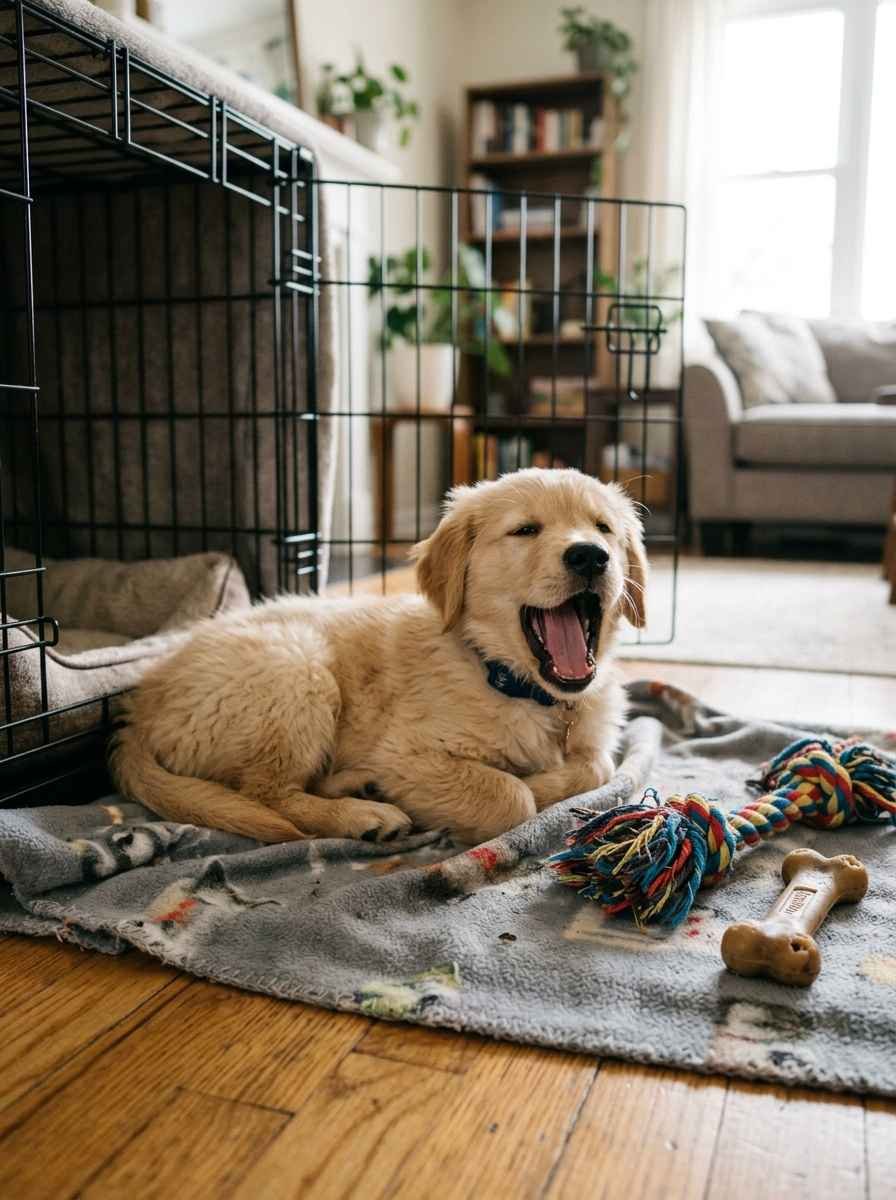
This simple timing shift alone can dramatically reduce crying, since a sleepy puppy is much more likely to settle quickly.
Step 4: Use Comfort Items Strategically
Small comforts can make a big difference in easing anxiety.
- A blanket or shirt with your scent
- A safe chew toy or stuffed comfort toy
- A soft ticking clock (mimics a heartbeat sound for some puppies)
- White noise or calm music nearby
Avoid: Anything with loose strings, stuffing, or small parts that could be a choking hazard when unsupervised.
Step 5: Keep Departures and Returns Low-Key
Big, emotional goodbyes and excited hellos can actually increase anxiety around the crate.
- Skip the dramatic “bye bye, I love you” send-off
- Don’t rush to let them out the second they whine
- Wait for a brief pause in crying before opening the door (this avoids rewarding the crying itself)
- Keep entrances and exits calm and matter-of-fact
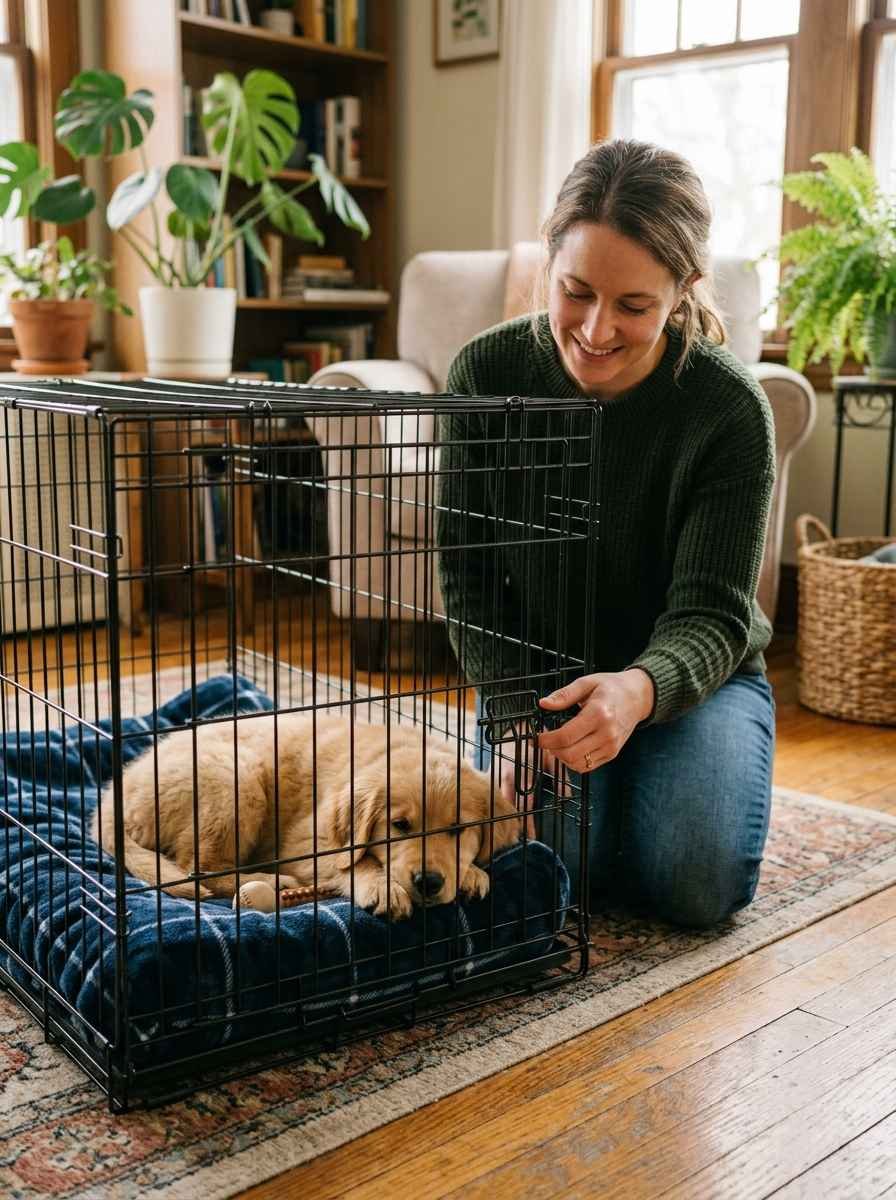
Step 6: Know the Difference Between Crying and Needing Something
Not all crying is the same – and knowing the difference helps you respond appropriately.
- Short fussing that fades: Often just adjustment – give it a few minutes
- Persistent, escalating crying:May mean they genuinely need a potty break
- Crying paired with pacing/whining at a specific time: Likely a bladder issue, especially in young puppies
Young puppies do need nighttime potty breaks – that’s not a training failure, it’s biology.
Common Mistakes That Cause More Crying
- Moving too fast through the training steps
- Using the crate only for punishment
- Ignoring genuine potty needs
- Making a big emotional scene at drop-off or pickup
- Crating an overly energetic, un-exercised puppy
A Simple Crate Training Progression
| Stage | Goal |
|---|---|
| Days 1–3 | Open crate, treats, no pressure |
| Days 4–7 | Short closed-door sessions nearby |
| Week 2 | Longer sessions, step out of room |
| Week 3+ | Full naps/nighttime crate use |
Every puppy moves through these stages at their own pace – and that’s completely okay.
Final Thoughts
Crate training without tears comes down to patience, gradual steps, and making the crate a place your puppy genuinely wants to be – not somewhere they’re forced into. Go at your puppy’s pace, and the crying will naturally fade as trust builds.