
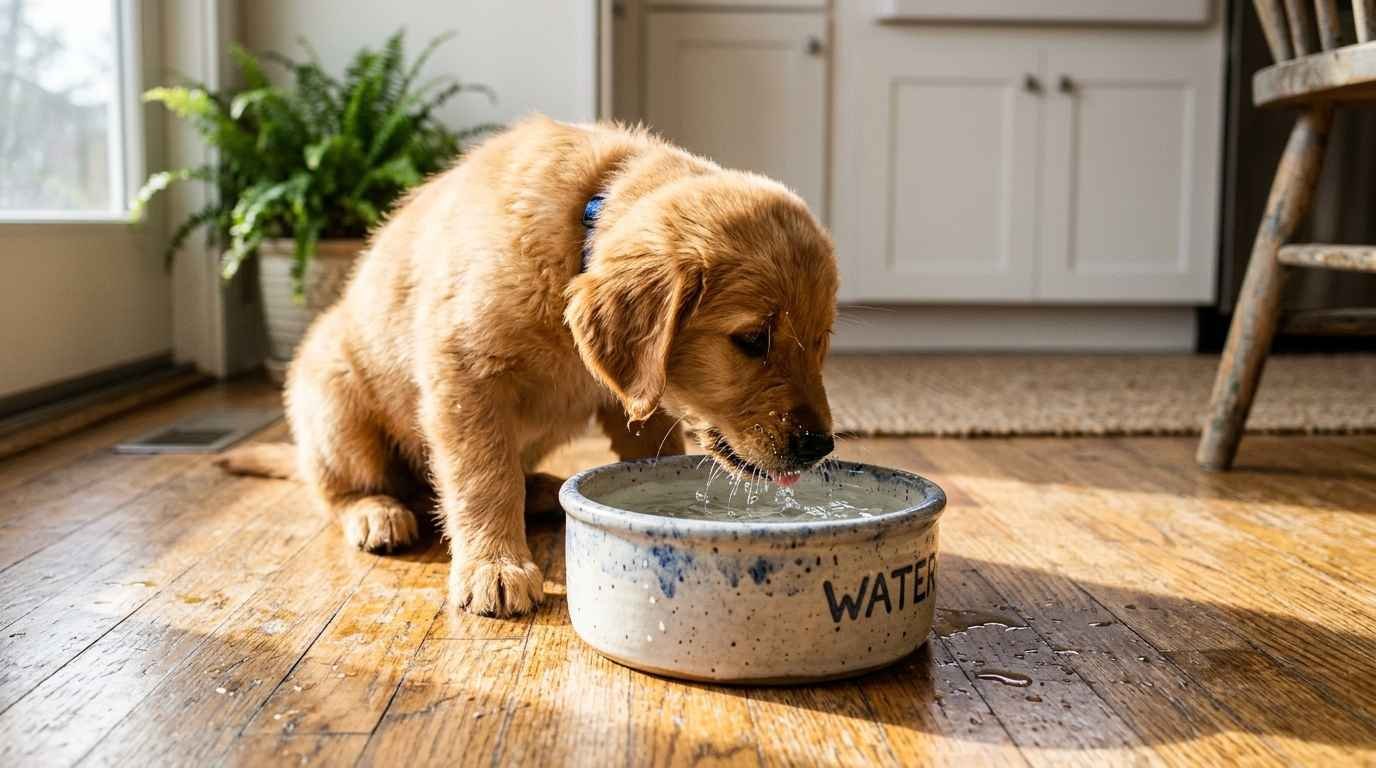
It’s easy to obsess over food portions and feeding schedules – but water often gets overlooked, even though it’s just as critical to your puppy’s health. A properly hydrated puppy has better energy, digestion, and organ function, while dehydration can sneak up faster than you’d expect, especially in small breeds and hot weather.
Here’s exactly how to keep your puppy’s hydration on track, every single day.
Why Hydration Matters So Much for Puppies
Puppies are more vulnerable to dehydration than adult dogs, and the effects can escalate quickly.
- Supports healthy digestion and nutrient absorption
- Regulates body temperature, especially during play
- Keeps organs, including kidneys, functioning properly
- Prevents fatigue and low energy
Because puppies are smaller and more active, even mild fluid loss can affect them faster than it would an adult dog.
Step 1: Know How Much Water Your Puppy Needs
While needs vary by size, age, and activity level, a general guideline is helpful to start with.
- Rule of thumb: About ½ to 1 ounce of water per pound of body weight daily
- Active puppies or those in warm climates may need more
- Puppies eating wet or fresh food may drink slightly less, since food adds moisture
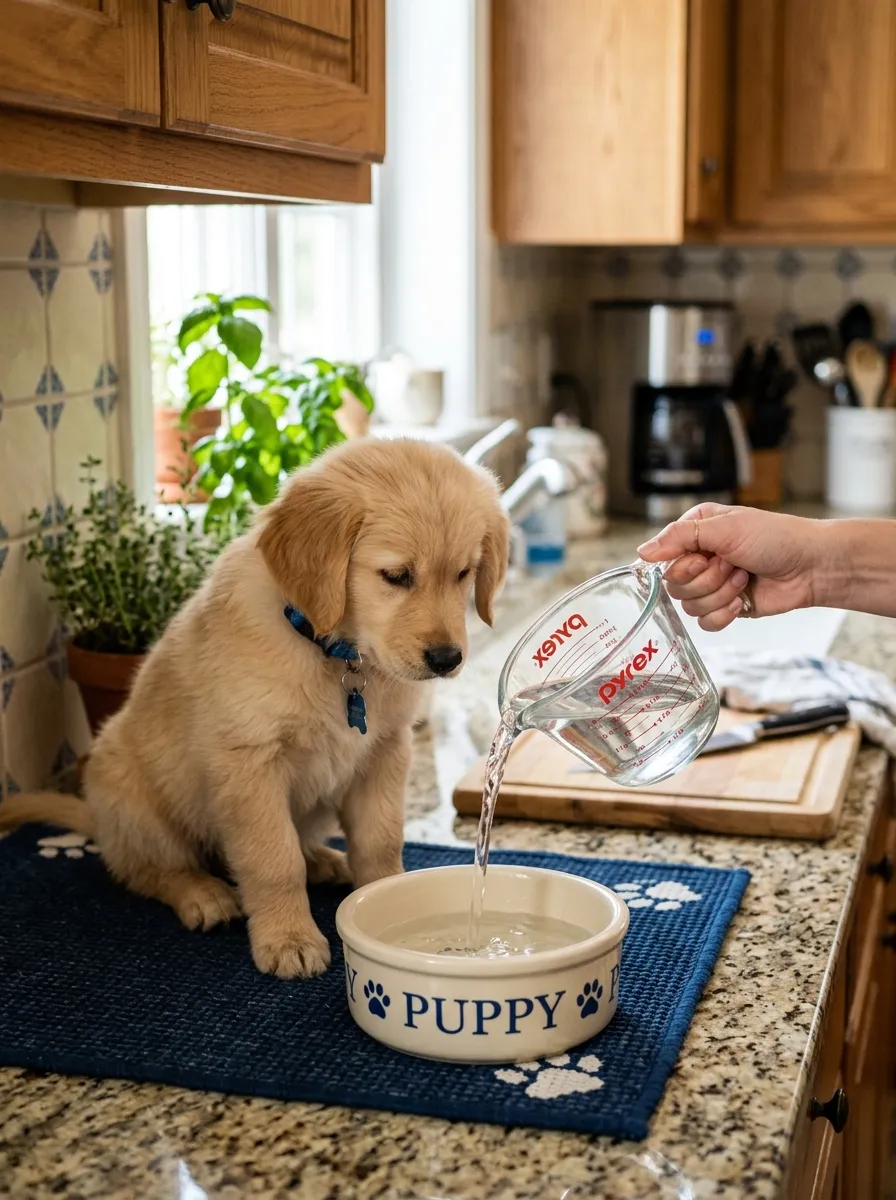
Tip: Don’t over-restrict water intake – puppies are generally good at self-regulating unless there’s an underlying issue.
Step 2: Keep Fresh Water Available at All Times
Unlike food, water shouldn’t be scheduled or rationed under normal circumstances.
- Refill bowls at least 2–3 times daily
- Wash bowls regularly to prevent bacteria buildup
- Place water bowls in multiple easy-to-reach spots, especially in larger homes
- Keep a bowl near the crate or sleeping area overnight
Consistent access helps prevent the start-stop drinking habits that can lead to dehydration.
Step 3: Watch for Early Signs of Dehydration
Catching dehydration early makes it much easier to correct.
Signs to watch for:
- Dry or sticky gums
- Loss of skin elasticity (gently pinch the skin – it should snap back quickly)
- Sunken eyes
- Low energy or excessive panting
- Reduced urination

If you notice several of these signs together, contact your vet promptly – dehydration can escalate quickly in young puppies.
Step 4: Encourage Drinking During Hot Weather or Active Play
Puppies don’t always pace themselves, especially during exciting play sessions.
- Offer water breaks every 15–20 minutes during active outdoor play
- Keep walks shorter during peak heat
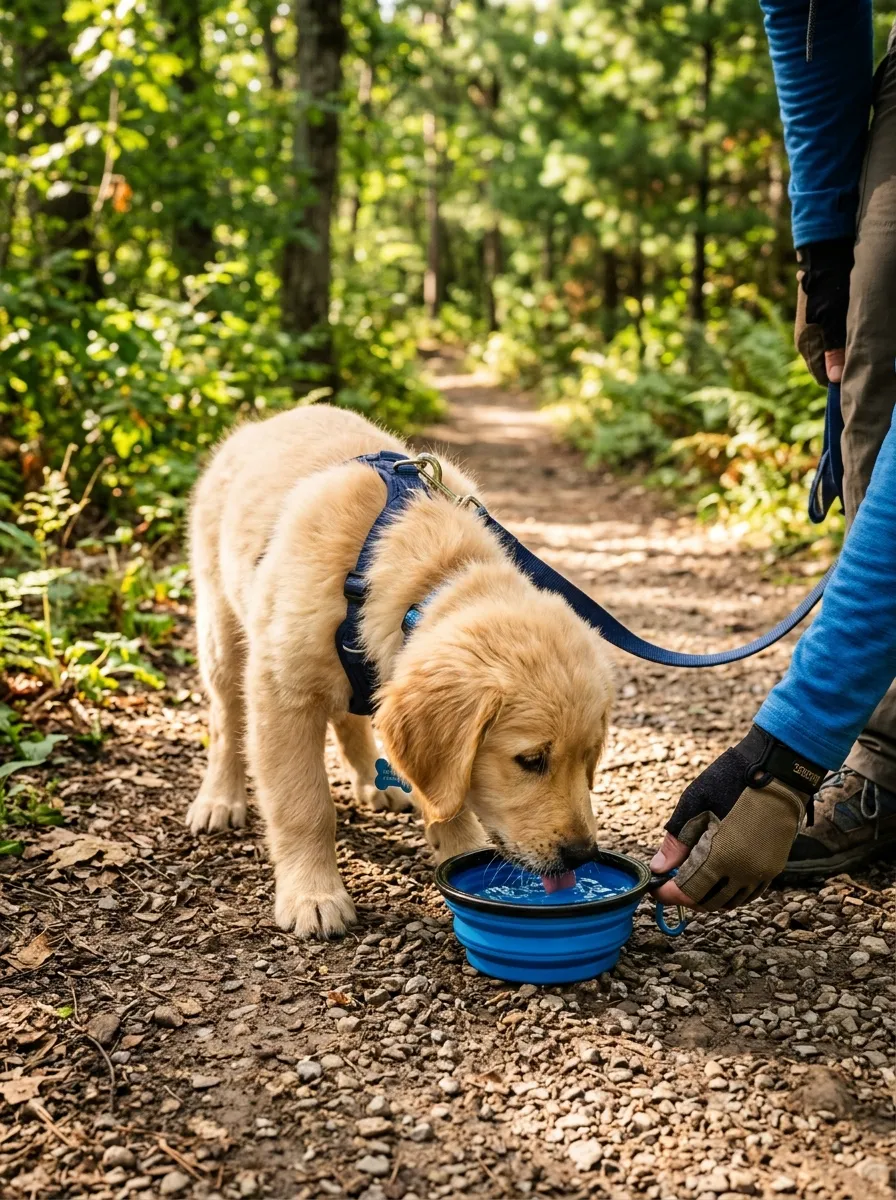
- Bring a portable water bottle and travel bowl for outings
- Watch for excessive panting as a cue to pause and hydrate
Tip: Add ice cubes to water on hot days – many puppies find this extra enticing.
Step 5: Boost Hydration Through Food
Food can quietly support hydration alongside regular water intake.
- Mix a small amount of water into dry kibble
- Offer wet food occasionally, which has higher moisture content
- Puppy-safe bone broth (unsalted, no onion or garlic) can be a tasty hydration boost
- Avoid feeding foods with added salt, which can increase water loss
This is especially helpful for picky drinkers or puppies transitioning to a new home.
Step 6: Address Picky or Low Water Intake
Some puppies just aren’t naturally big drinkers – here’s how to gently encourage more.
- Try a pet water fountain (moving water attracts many dogs)
- Experiment with bowl material (some puppies dislike plastic)
- Keep water away from food if your puppy seems distracted by proximity
- Rule out stress or anxiety as a factor in reduced drinking
If low intake continues despite these adjustments, a vet check is a good next step to rule out underlying issues.
Common Mistakes to Avoid
- Leaving water bowls empty or unmonitored
- Restricting water as a house-training shortcut
- Ignoring early signs of dehydration
- Skipping water breaks during hot walks or play
- Using dirty or rarely cleaned water bowls
- Keeping your puppy properly hydrated is important, but creating a safe environment is just as essential, especially as curious puppies explore everything around them. How to Puppy Proof Your Home Step by Step can help you identify and remove common household hazards.
A Simple Daily Hydration Checklist
| Task | Frequency |
|---|---|
| Refill water bowl | 2–3 times daily |
| Clean water bowl | Daily |
| Offer water during play | Every 15–20 minutes |
| Check gums/skin elasticity | Weekly, or if concerned |
| Add moisture to food | As needed |
A little daily attention goes a long way toward keeping your puppy healthy and energized.
Final Thoughts
Keeping your puppy properly hydrated isn’t complicated – it just takes consistency and a little awareness of the signs to watch for. Fresh water, regular breaks, and a close eye on their habits will keep them happy, healthy, and ready to play.