

Ever call your puppy’s name and get… nothing? A blank stare, a squirrel-chasing detour, or complete indifference? Don’t worry – this is completely normal, and teaching a puppy their name is actually one of the easiest (and most fun) training wins you’ll get early on.
Here’s exactly how to teach your puppy their name quickly, using simple, positive methods that stick.
Why Name Recognition Matters So Much
Teaching your puppy their name isn’t just cute – it’s foundational for everything else you’ll train later.
- It builds the base for recall and other commands
- It grabs your puppy’s attention before giving instructions
- It strengthens your bond through positive association
- It’s often one of the very first things puppies learn successfully
Think of their name as an “attention button” – once it’s learned, everything else becomes easier to teach.
Step 1: Choose a Name and Stick With It
Consistency matters more than you’d think, especially in the early days.
- Pick a short, clear name (1–2 syllables works best)
- Avoid names that sound similar to common commands (like “Kit” vs. “Sit”)
- Use the name consistently – skip nicknames until training is solid
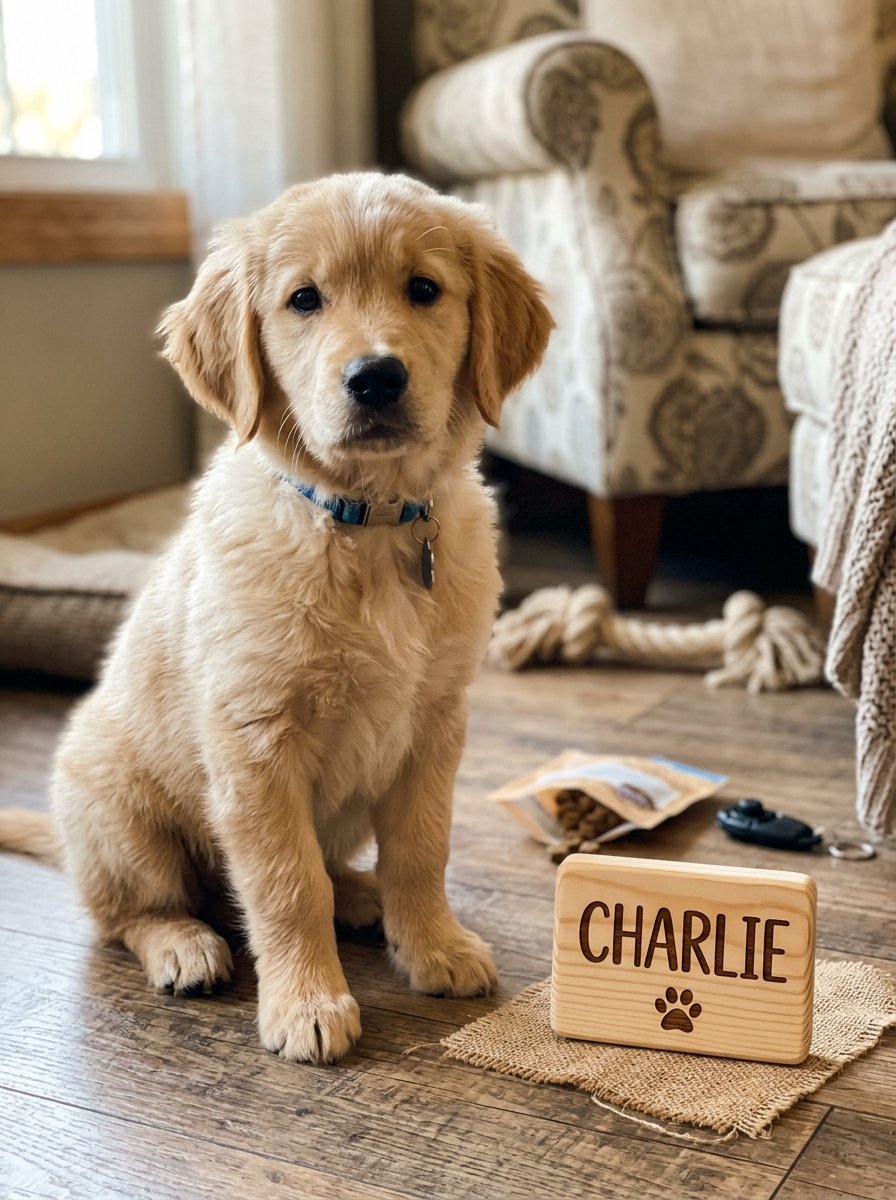
Tip: The whole household should use the same name and pronunciation to avoid confusing your puppy.
Step 2: Start in a Low-Distraction Environment
Begin training somewhere quiet, with minimal noise or movement to compete for attention.
- Choose a calm room in your home
- Have a handful of small, high-value treats ready
- Keep initial sessions short – just a few minutes at a time
- Starting with short, positive training sessions helps your puppy build confidence and respond well to you in new situations. This can also make preparing for your puppy’s first vet visit a little easier.
Starting simple sets your puppy up for quick, confident wins.
Step 3: Use the Name-and-Reward Method
This is the core technique, and it’s wonderfully simple.
- Say your puppy’s name once, in a happy tone
- The moment they look at you, mark it (“Yes!” or a clicker)
- Immediately reward with a treat
- Repeat several times in short session
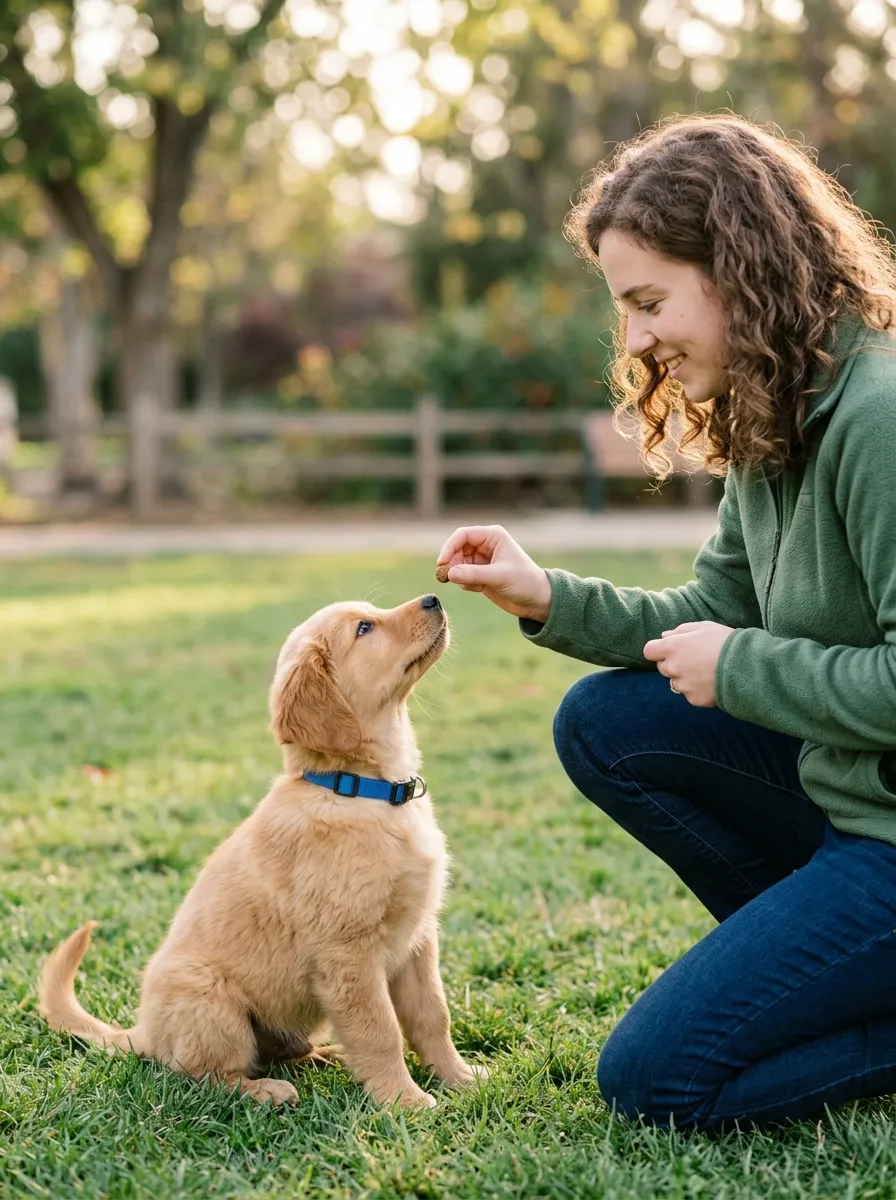
Important: Only say the name once per repetition – repeating it over and over teaches puppies to tune it out.
Step 4: Avoid Negative Associations
This is one of the most overlooked (and important) rules in name training.
- Never use your puppy’s name during scolding
- Avoid saying their name followed by something unpleasant (like nail trims or baths)
- Keep the name linked only to positive experiences, especially early on
If you need to redirect unwanted behavior, use a neutral cue instead – save their name for happy moments.
Step 5: Practice in Different Locations and Situations
Once your puppy responds reliably indoors, start adding mild distractions.
- Practice in the backyard
- Try it during short walks
- Test it with a toy nearby (but not directly in use)
- Gradually increase distraction levels as they improve
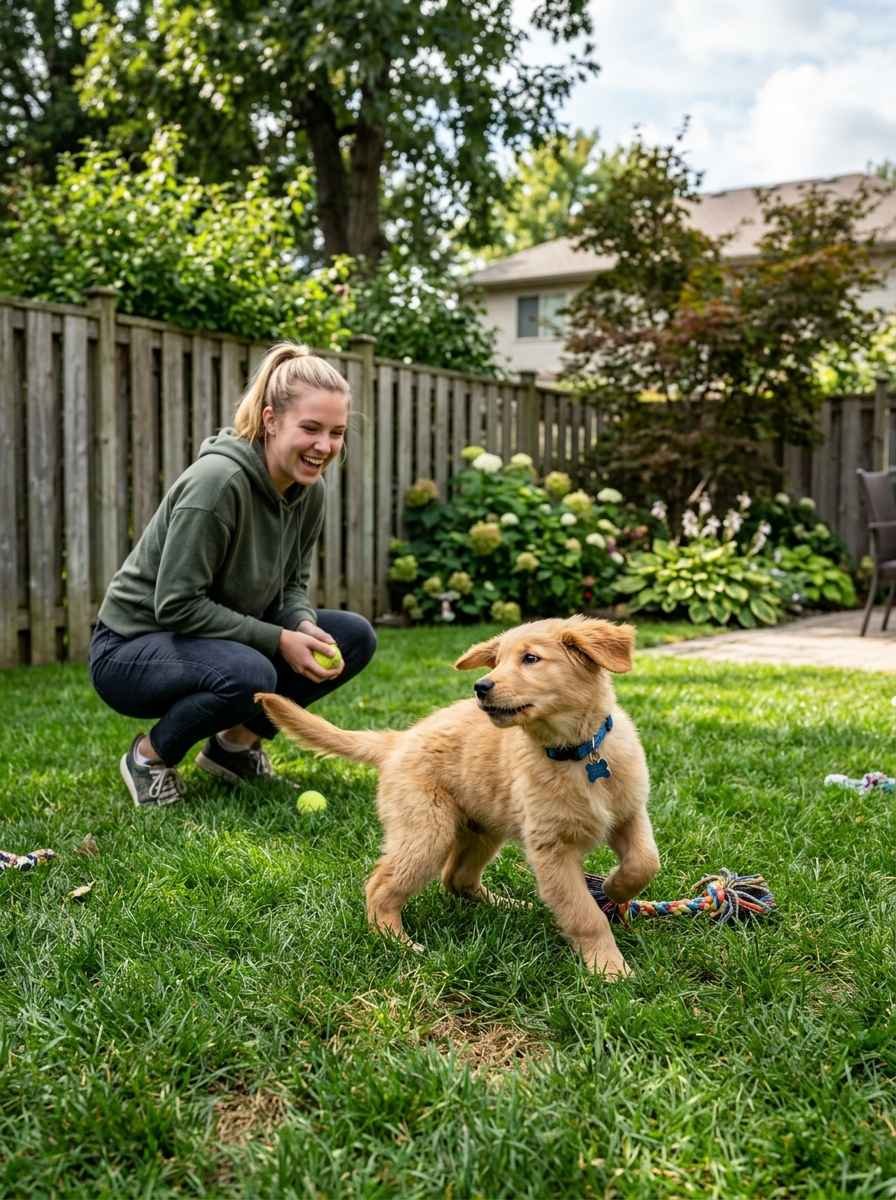
Tip: If your puppy doesn’t respond in a new environment, go back a step – lower the distraction level and rebuild success.
Step 6: Add Duration and Real-Life Application
Once basic recognition is solid, start using their name naturally throughout the day.
- Call their name before meals, walks, or playtime
- Use it briefly before giving other cues (“Bella, sit”)
- Reward attentive responses randomly to keep it reliable long-term
This transitions name recognition from a “trick” into a natural, everyday response.
Common Mistakes to Avoid
- Repeating the name multiple times in a row
- Using the name during discipline or scolding
- Training only in one location
- Skipping rewards once the behavior starts improving
- Choosing a name too similar to a common command
A Simple Name Training Progression
| Stage | Focus |
|---|---|
| Days 1–3 | Quiet room, name + treat pairing |
| Days 4–5 | Add short delays before reward |
| Week 2 | Practice in different rooms |
| Week 3 | Add mild outdoor distractions |
| Week 4+ | Use name naturally throughout the day |
Most puppies pick this up faster than expected – often within the first one to two weeks.
Final Thoughts
Teaching your puppy their name is a simple, rewarding first step into training – and it lays the groundwork for everything that follows. Keep it positive, stay consistent, and celebrate every little response along the way.